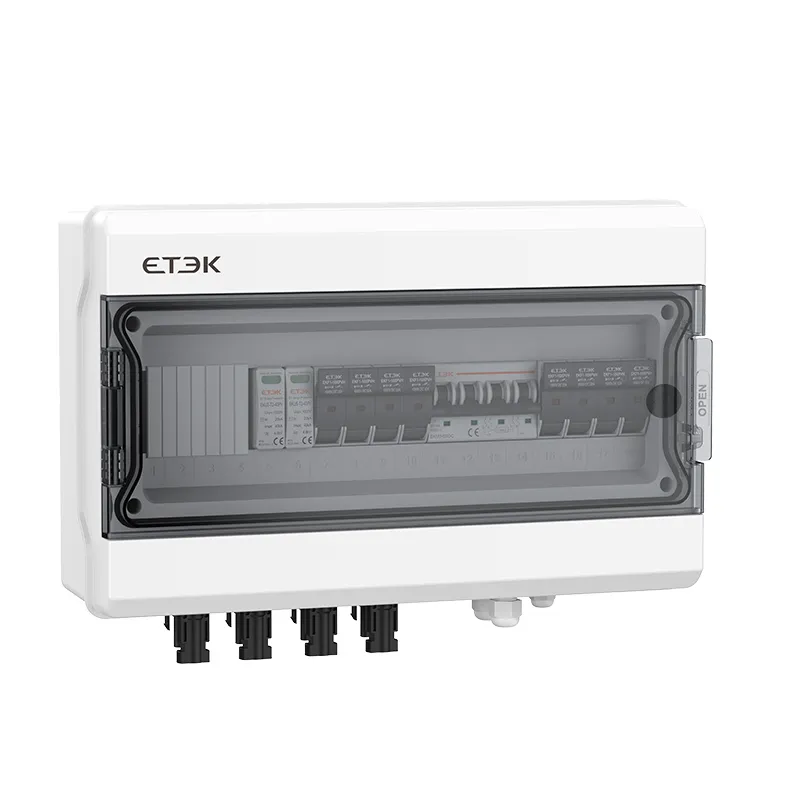
You're designing a solar array—commercial rooftop, ground-mount farm, or utility-scale plant. Every DC circuit needs protection: overcurrent protection for the cables, and a reliable way to disconnect for maintenance. A fuse disconnector does both in one compact device. It's a switch that integrates a fuse, giving you manual isolation and automatic fault clearing in a single package. This guide walks through the key specifications—voltage ratings, current capacity, compliance standards, and installation considerations—so you can select the right protection for your photovoltaic system.
What a Fuse Disconnector Does in a PV System
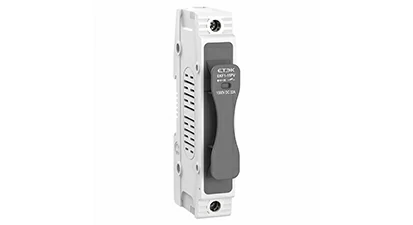
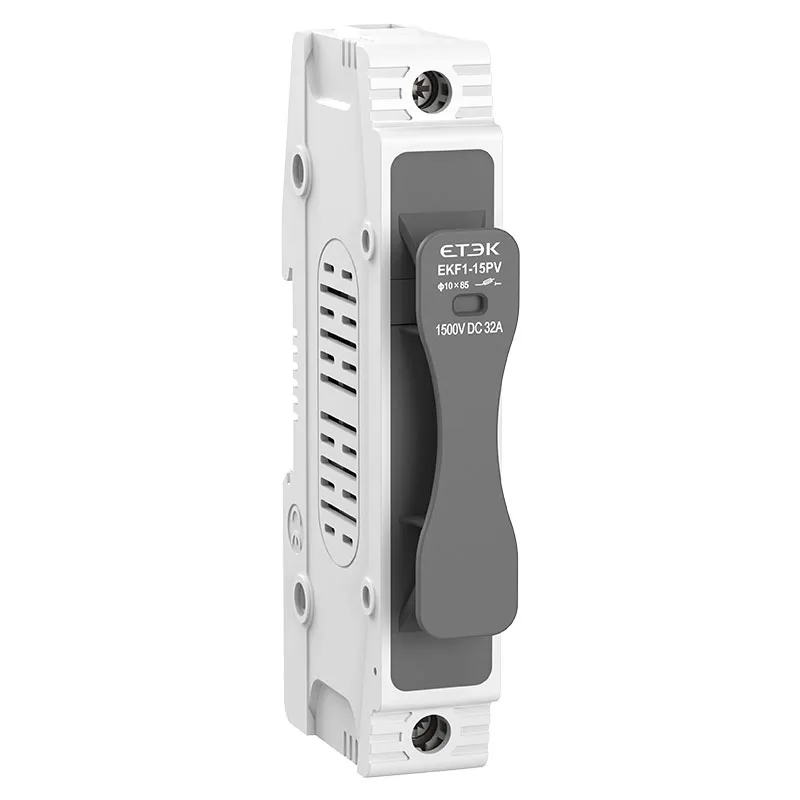
A fuse disconnector serves two essential functions in a solar DC circuit. First, it provides overcurrent protection through its integrated fuse—when current exceeds the rated capacity, the fuse element melts, opening the circuit and preventing damage to cables and equipment. Second, it functions as a manual switch, allowing technicians to safely isolate the circuit for maintenance, troubleshooting, or emergency shutdown. This dual functionality eliminates the need for separate fuse holders and disconnect switches, reducing component count and simplifying panel layout.
Overcurrent Protection in DC Circuits
DC circuits present unique challenges for overcurrent protection. Unlike AC, DC current has no zero-crossing point, making arc extinction more difficult. Fuse disconnectors designed for photovoltaic applications use gPV characteristics—specialized fuse links optimized for the overload and short-circuit profiles of solar arrays. This ensures reliable clearing of faults without nuisance tripping during normal operation.
Manual Switching for Safety and Maintenance
The switching function is equally important. During installation, testing, or maintenance, technicians need a visible break in the circuit. The fuse disconnector provides that—a manual lever or handle that opens the contacts, creating an air gap that confirms the circuit is de-energized. This visible isolation is a critical safety feature for anyone working on the DC side of a solar system.
Voltage Ratings — Why 1500VDC Matters
Solar PV systems are trending toward higher voltages. The shift from 1000VDC to 1500VDC systems reduces cable losses, allows longer string lengths, and lowers overall system cost. But higher voltage demands higher-rated protection devices. The EKF1-15PV is rated for 1500VDC maximum operating voltage, making it suitable for modern high-voltage solar arrays. For lower-voltage systems, 1000VDC variants are also available.
Matching Voltage to System Design
Selecting the right voltage rating is straightforward: the disconnector's rated voltage must equal or exceed the maximum system voltage. For a 1500VDC string, you need a 1500VDC-rated device. Using a lower-rated device risks insulation breakdown and arc flash hazards.
Impulse Withstand Voltage
Beyond continuous operating voltage, consider impulse withstand voltage (Uimp). The EKF1-15PV is rated at 8kV impulse withstand, providing protection against transient overvoltages from lightning strikes or switching surges. This is particularly important in outdoor solar installations exposed to weather.
Current Ratings and Fuse Link Compatibility
Current rating determines the maximum continuous current the device can carry. The EKF1-15PV is rated at 35A, suitable for medium-to-large commercial strings. But the fuse link itself is replaceable—the device accepts both 10×85mm and 14×85mm fuse links, giving you flexibility to match protection to specific cable sizes and fault current levels.
Understanding gPV Characteristics
Fuse links for photovoltaic applications carry the gPV designation. This indicates they're designed for the specific overload characteristics of PV circuits—handling the continuous DC current from solar panels while clearing short-circuit faults reliably. Standard gPV fuse links are available in various current ratings, allowing you to coordinate protection across the system.
Short-Circuit Current Rating
The conditional short-circuit current rating (Icc) tells you how much fault current the device can safely interrupt. The EKF1-15PV is rated at 50kA—meaning it can clear a fault of up to 50,000 amps without catastrophic failure. This high interrupt capacity is essential for utility-scale systems where fault currents can be substantial.
Installation and DIN Rail Mounting
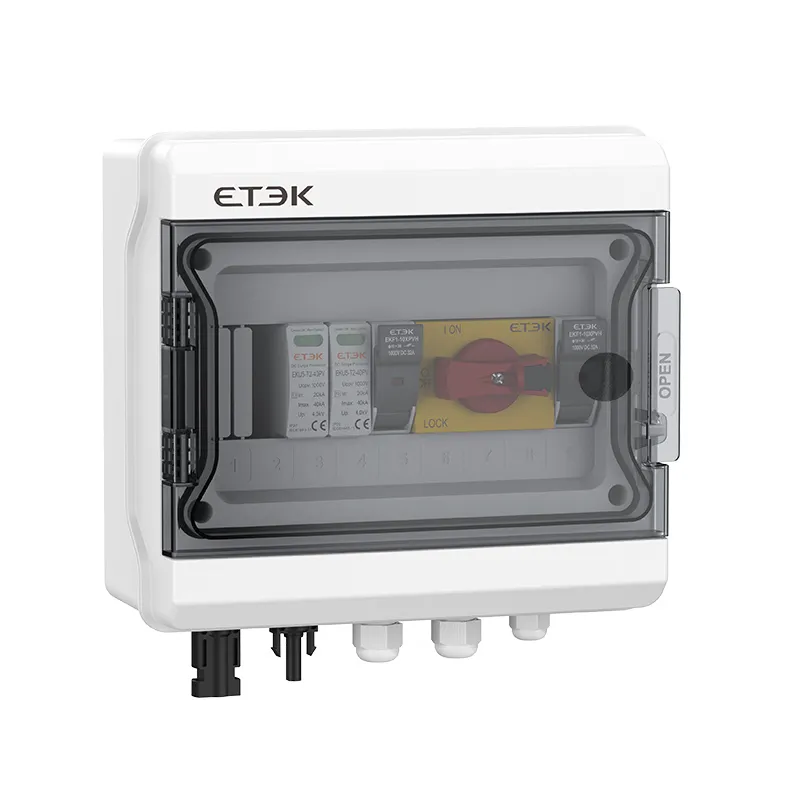
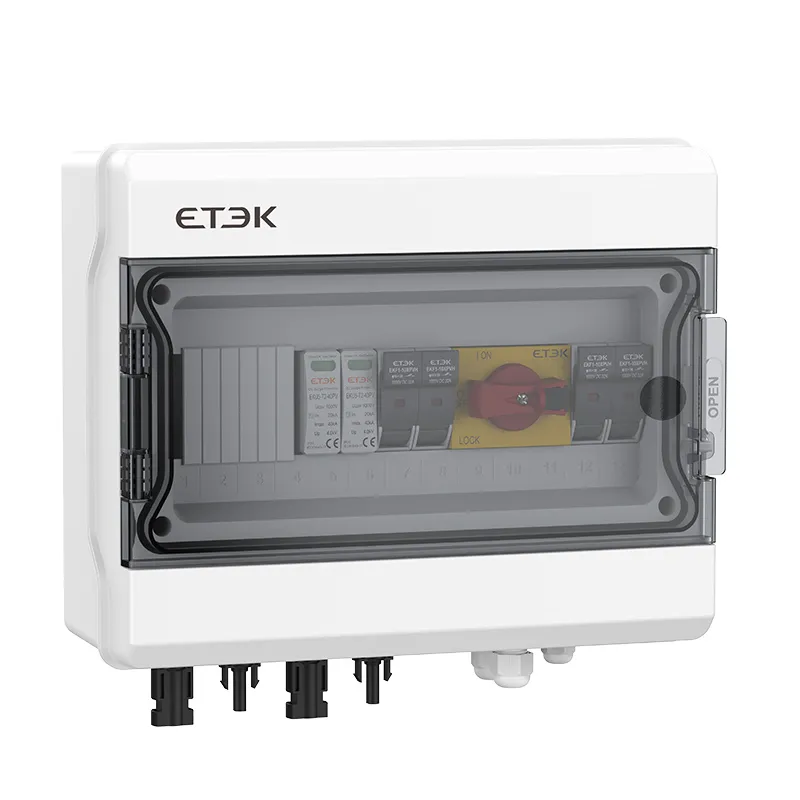
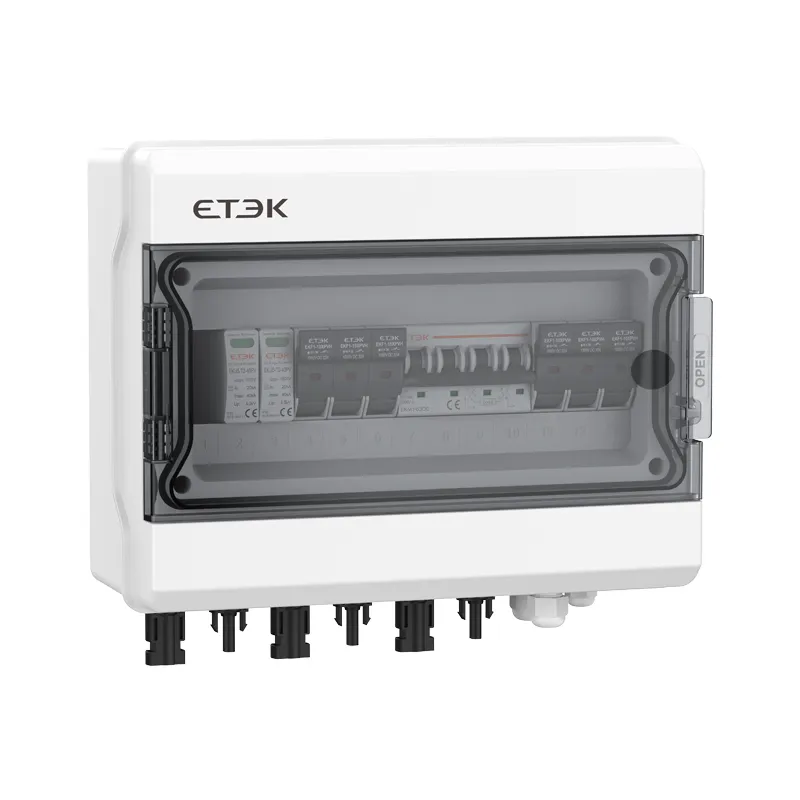
Space is always at a premium in combiner boxes and distribution panels. The EKF1-15PV addresses this with a compact 22mm width design—just one modular unit wide. It mounts on standard 35mm DIN rails (EN60715), the industry standard for industrial control and distribution equipment. This allows dense packing of multiple disconnectors in a single enclosure.
Wiring and Termination
Terminal size determines what cables you can connect. The EKF1-15PV accepts cables up to 10mm², with a maximum tightening torque of 2.5Nm. Proper torque is critical—under-tightening creates resistance and heat; over-tightening can damage the terminal. Always use a torque wrench and follow the specified values.
Environmental Considerations
The device operates in ambient temperatures from -5°C to +40°C, with storage temperatures from -25°C to +55°C. The IP20 degree of protection (after installation) indicates it's suitable for indoor use in dry environments, typically within combiner boxes or enclosures. For outdoor exposure, additional enclosure protection would be required.
Compliance and Safety Standards
Photovoltaic protection devices must meet rigorous international standards. The EKF1-15PV complies with IEC 60947-3, the international standard for low-voltage switchgear and controlgear. This covers essential safety aspects including dielectric properties, temperature rise, and short-circuit performance. The utilization category DC-PV0 specifies the device's suitability for photovoltaic DC applications.
Utilization Category DC-PV0
The DC-PV0 designation indicates the device is tested and rated for photovoltaic DC circuits. This matters because DC switching and protection requirements differ significantly from AC. DC-PV0 devices are designed to handle the unique arcing characteristics of DC, with appropriate contact materials and arc extinguishing mechanisms.
Pollution Degree and Installation Environment
The device is rated for Pollution Degree 3, meaning it's suitable for industrial environments where conductive dust or moisture may be present (within the enclosure). This is typical for combiner boxes and distribution panels in solar installations, where some contamination is expected but the device is protected by the enclosure.
| Specification | EKF1-15PV | Why It Matters |
|---|---|---|
| Rated voltage | 1500VDC | Suits modern high-voltage solar arrays |
| Rated current | 35A | Covers medium-to-large string applications |
| Short-circuit current | 50kA | High interrupt capacity for utility-scale systems |
| Fuse link size | 10×85mm / 14×85mm | Flexible fuse replacement options |
| Width | 22mm (1P) | Space-efficient DIN rail mounting |
| Impulse withstand | 8kV | Protection against lightning and switching surges |
| Standard | IEC 60947-3 | Internationally recognized safety compliance |
| Operating temp | -5°C to +40°C | Suitable for most installation environments |
What Professionals Ask About PV Fuse Disconnectors
What's the difference between a fuse disconnector and a circuit breaker?
A fuse disconnector combines a manual switch with a replaceable fuse link. When the fuse blows, you replace the fuse element. A circuit breaker uses a thermal-magnetic mechanism that can be reset. Fuse disconnectors are generally more cost-effective and offer higher short-circuit ratings for DC applications.
Can I use a standard AC fuse disconnector for DC solar applications?
No. DC arcs are harder to extinguish than AC arcs because there's no zero-crossing point. Use only devices specifically rated for DC-PV0 applications and compliant with IEC 60947-3 for photovoltaic systems.
How do I choose between 1000VDC and 1500VDC ratings?
Match the device voltage rating to your system's maximum voltage. 1500VDC systems offer longer string lengths and lower losses but require higher-rated components. Choose based on your inverter and module specifications.
What maintenance does a fuse disconnector require?
Periodic visual inspection of the fuse link and contacts, ensuring proper torque on terminal connections, and verifying the switch operates smoothly. Replace fuse links after any fault event.
Secure Your Solar Array with the Right Disconnect Solution
Selecting a fuse disconnector comes down to three decisions: voltage rating (match your system), current rating (match your string), and compliance (IEC 60947-3 with DC-PV0). Request a quote or technical consultation → —ETEK Solar's team can help you select the right model for your specific array configuration.
This article was written with the assistance of AI to organise technical data from ETEK Solar's product documentation and industry standards.
ETEK Solar offers a comprehensive range of photovoltaic protection devices, including the EKF1-15PV 1500VDC 35A Solar Photovoltaic Fuse Switch Disconnector with DIN Rail Mounting. This compact 22mm-wide device is rated for 1500VDC, 35A, with a 50kA short-circuit capacity, and complies with IEC 60947-3 (DC-PV0). It accepts 10×85mm and 14×85mm gPV fuse links, mounts on standard 35mm DIN rails, and operates from -5°C to +40°C. ETEK Solar's fuse disconnectors are available in 1000VDC and 1500VDC variants with current ratings up to 50A, suitable for combiner boxes, battery storage, and solar panels. Connect with ETEK Solar to discuss your voltage class, current requirements, and installation configuration.