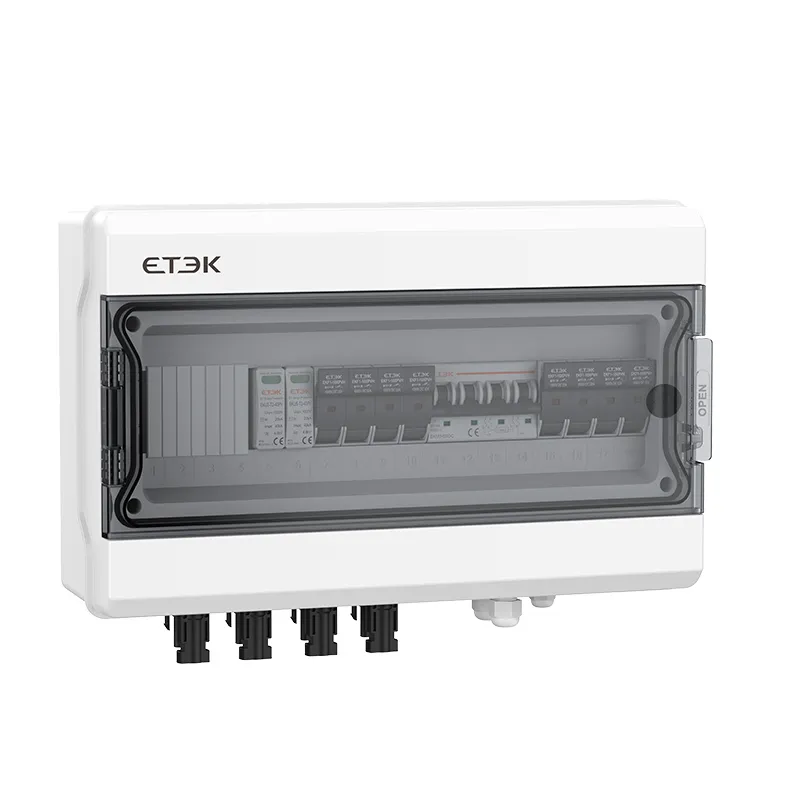
You’re specifying protection devices for a photovoltaic system, an EV charging station, or a modern industrial installation. Traditionally, you’d need two separate devices: an RCCB for earth leakage protection and an MCB for overcurrent protection.
A RCBO (Residual Current Circuit Breaker with Overcurrent protection) combines both functions into a single unit — saving panel space, reducing wiring, and simplifying installation. The EKL5-63B Type B RCBO from ETEK Solar takes this further, offering comprehensive protection against AC, pulsating DC, and smooth DC residual currents. This makes it particularly suited for renewable energy systems where inverter-generated DC leakage is a real concern.
This guide covers what makes the Type B RCBO different, its key specifications, and where it’s used. For engineers and procurement professionals, this is a practical look at a device that addresses modern electrical safety challenges.
Why You Need an RCBO — Not Just an RCCB
The distinction between an RCCB and an RCBO matters more than you might think.
Two Devices, One Package
An RCBO integrates the functions of a residual current circuit breaker (RCCB) and a miniature circuit breaker (MCB). It protects against both earth leakage (which can cause electric shock) and overcurrent (overload and short-circuit, which can cause fires). One device does the job of two — saving space and reducing installation time.
The Practical Advantage
For panel builders, fewer devices means simpler layouts, less busbar complexity, and smaller enclosures. For maintenance teams, fewer devices means fewer components to test and replace. The cost difference between an RCCB plus MCB versus a single RCBO is often negligible, while the space savings are significant.
Compliance Made Simpler
Using an RCBO simplifies compliance with electrical safety standards. Since the device combines both protection functions in one unit, there’s no question about whether the RCCB and MCB are correctly coordinated. The EKL5-63B meets IEC 61009-1 and IEC 62423 standards, providing the certification that inspectors look for.
Understanding the Type B Difference
Not all RCBOs are the same. The type designation matters — especially in modern electrical systems.
Type A vs. Type B
A Type A RCBO detects AC residual currents and pulsating DC residual currents. This covers most traditional applications. A Type B RCBO detects AC, pulsating DC, and smooth DC residual currents. Smooth DC leakage is common in systems with inverters, variable frequency drives, and battery storage.
Where Smooth DC Leakage Comes From
Photovoltaic systems use inverters to convert DC to AC. Electric vehicle chargers use rectifiers to convert AC to DC. Both generate smooth DC leakage currents that Type A devices can miss. If a fault creates a smooth DC residual current, a Type A RCBO may not trip — leaving the system unprotected. The Type B RCBO detects this fault and trips, preventing electric shock and equipment damage.
The Right Choice for Renewable Energy
For PV systems, EV chargers, and energy storage installations, a Type B RCBO is the appropriate choice. The EKL5-63B is designed specifically for photovoltaic systems, EV chargers, and other demanding applications.
Key Specifications of the EKL5-63B Type B RCBO
Here’s what the specifications tell you about this device’s capabilities.
Current and Voltage Ratings
Rated current is available from 6A to 63A. Rated voltage is 230/400V~240/415V. This range covers most residential, commercial, and light industrial applications.
Pole Configurations
The device is available in 2P (1P+N) and 4P (3P+N) configurations, with the N pole on the right. For single-phase systems, the 2P version provides protection on both live and neutral. For three-phase systems, the 4P version provides comprehensive protection.
Tripping Characteristics
The tripping curve is available in B, C, and D types. B curve is suitable for resistive loads with low inrush current. C curve is suitable for inductive loads with moderate inrush. D curve is suitable for high inrush loads like transformers and motors. Rated sensitivity is available in 30mA, 100mA, and 300mA. The 30mA sensitivity is standard for shock protection; 100mA and 300mA are used for fire protection or equipment protection.
Breaking Capacity
Rated short-circuit breaking capacity is 10kA. This means the device can safely interrupt a fault current of up to 10,000 amps without damage — sufficient for most distribution systems.
Ambient Temperature Range
Operating temperature range is -25°C to +55°C. This wide range covers both cold outdoor installations and hot industrial environments.
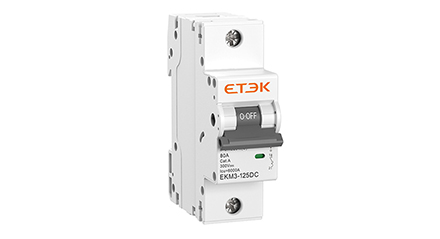
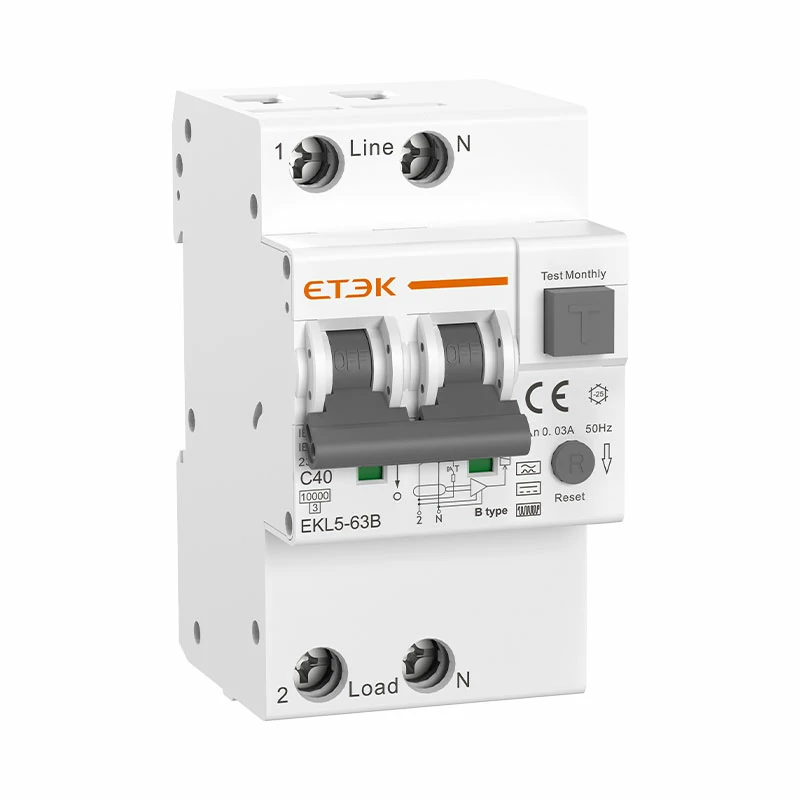
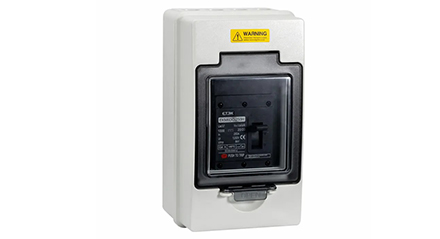
[Image: EKL5-63B Type B RCBO showing compact design and terminal configuration]
| Parameter | EKL5-63B Specification |
|---|---|
| Rated Current | 6~63A |
| Rated Voltage | 230/400V~240/415V |
| Poles | 2P(1P+N), 4P(3P+N) |
| Tripping Curve | B, C, D |
| Rated Sensitivity | 30mA, 100mA, 300mA |
| Breaking Capacity | 10kA |
| Ambient Temperature | -25°C to +55°C |
| Standard | IEC 61009-1, IEC 62423 |
Where Type B RCBOs Are Used
Type B RCBOs are found in applications where DC leakage is a real possibility.
Photovoltaic Systems
PV systems generate DC power from solar panels. Inverters convert this to AC, but the DC side of the system can produce smooth DC leakage currents. A Type B RCBO on the AC side of the inverter provides comprehensive protection.
Electric Vehicle Charging Stations
EV chargers use rectifiers to convert AC to DC for battery charging. These rectifiers generate pulsating and smooth DC currents. A Type B RCBO protects both the charger and the vehicle from leakage faults.
Variable Frequency Drives
VFDs used in motor control applications generate harmonics and DC components. Type B RCBOs provide the protection that standard Type A devices can‘t offer.
Energy Storage Systems
Battery energy storage systems (BESS) use bidirectional inverters that can generate DC leakage in both directions. Type B RCBOs are the appropriate protection choice for these applications.
Questions Engineers and Procurement Teams Ask
What’s the difference between a Type A and Type B RCBO?
A Type A RCBO detects AC residual currents and pulsating DC residual currents. A Type B RCBO detects AC, pulsating DC, and smooth DC residual currents. Smooth DC leakage is common in systems with inverters, rectifiers, and battery storage. For PV systems, EV chargers, and VFD applications, Type B is the right choice. The EKL5-63B is designed specifically for photovoltaic systems, EV chargers, and other demanding applications.
What sensitivity should I choose for my application?
30mA sensitivity is standard for shock protection and is required by most electrical codes for circuits that can be touched. 100mA sensitivity is used for fire protection in circuits where 30mA tripping could cause nuisance trips. 300mA sensitivity is used for equipment protection where higher leakage is normal. The EKL5-63B is available in 30mA, 100mA, and 300mA options.
What is the difference between 2P and 4P configurations?
2P (1P+N) provides protection on one phase and neutral—suitable for single-phase systems. 4P (3P+N) provides protection on three phases and neutral—suitable for three-phase systems. The EKL5-63B is available in both configurations. For solar PV systems connected to three-phase grids, 4P is typically required.
Why ETEK Solar Delivers Quality Protection Devices
Choosing the right supplier matters as much as choosing the right device.
ETEK Solar manufactures residual current circuit breakers with overcurrent protection designed for photovoltaic systems, EV chargers, and other demanding applications. The EKL5-63B Type B RCBO offers comprehensive protection against AC, pulsating DC, and smooth DC residual currents, meeting IEC 61009-1 and IEC 62423 standards.
The company is committed to developing innovative green energy solutions and enhancing product safety and reliability. For engineers and procurement professionals, the decision to specify a Type B RCBO is about ensuring comprehensive protection for modern electrical systems. ETEK Solar provides the product quality, certification, and application expertise that renewable energy and industrial projects demand.
Ready to evaluate the EKL5-63B for your application? Reach out to ETEK Solar’s team — they can provide detailed specifications, sample configurations, and application guidance based on your specific protection requirements.
-1640.jpg)