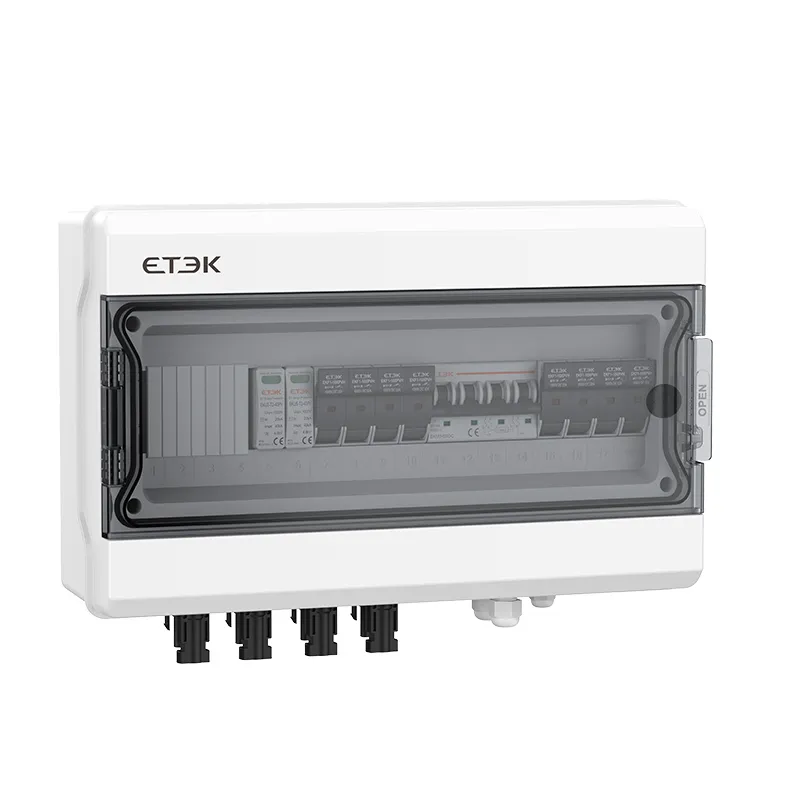
A solar farm inverter shuts down unexpectedly. The site manager walks to the combiner box and finds a DC Molded Case Circuit Breaker in the tripped position. He resets it. It holds for an hour, then trips again. This pattern repeats, wasting daylight hours and eroding energy revenue. A DC breaker that trips repeatedly isn‘t just an annoyance—it’s a diagnostic signal. The cause could be a sustained overload beyond the breaker‘s 800A rating, a hard short circuit in the downstream wiring, or an internal issue like high contact resistance from oxidation or loose terminal connections. This guide walks you through the three most common failure patterns, how to distinguish them with simple field tests, and the practical steps to restore reliable protection without redesigning the entire distribution box.
Reading the trip timing like a mechanic reads an engine
The behavior of the breaker before and after tripping reveals the root cause. A DC Molded Case Circuit Breaker is designed to open on two types of faults: overload (too much current for too long) and short circuit (very high current instantaneously). But field failures also include nuisance tripping from environmental factors or internal wear.
Immediate trip on reset (instantaneous). As soon as you move the handle to ON, the breaker trips again instantly, often with a loud snap. This indicates a short circuit downstream. Do not keep resetting—locate the fault first. Use a multimeter to check resistance between the load terminal and ground (or between phases). A reading near zero ohms confirms a short circuit.
Delay of several seconds to minutes before tripping, then resets and repeats. The breaker holds for a short period, then trips. This is the classic overload pattern. The breaker‘s thermal element heats up over time. As the temperature rises, a bimetallic strip bends and trips the mechanism. The time to trip is inversely proportional to the square of the current. The higher the overload, the faster the trip.
Random tripping that correlates with hot weather or high enclosure temperature. The breaker trips more often in the afternoon than in the morning, or only when the combiner box is in direct sunlight. The ambient temperature is adding to the internal heating. The EKM6DC-800 is designed for ambient temperatures up to 40°C without derating. Above that, the effective trip current decreases.
Breaker feels warm or hot to the touch even when the handle is on and load is within rating. Internal contact resistance is elevated. This can come from loose terminal screws, oxidized contact surfaces, or worn arc extinguishing chamber components. This condition is dangerous because it can lead to thermal runaway without ever tripping the breaker.
Overload or short circuit – how to tell them apart in the field
The most important field distinction is between overload and short circuit because the fixes are different. Use a clamp meter to measure current on the breaker‘s load side immediately after reset. If the current reading exceeds the breaker’s rated current (630A or 800A), you have an overload. Reduce the load or add another breaker to split the circuit. If the current reading is within rating but the breaker still trips, measure the temperature of the breaker body with an infrared thermometer. An EKM6DC-800 running at rated current should have a terminal temperature rise ≤75°C above ambient. If the terminals are significantly hotter than that, suspect high contact resistance from loose connections or oxidized contacts. If the current reading is zero but the breaker trips immediately, you have a short circuit downstream. Isolate the load by disconnecting the outgoing cables one by one until the trip stops. The faulty branch is the last cable disconnected.
What the arc chamber tells you about internal wear
DC arc extinguishing is fundamentally harder than AC because DC arcs do not self‑extinguish at zero current. A DC Molded Case Circuit Breaker relies on a magnetic blowout coil and splitter plates to stretch and cool the arc. Over years of service, especially in high‑switching applications like solar inverters with daily on‑off cycling, the arc chute plates erode and lose efficiency.
Signs of arc chamber wear. The breaker trips normally, but you hear a sputtering or extended arcing sound when it opens under load. The interruption time feels longer than usual. Upon inspection, the arc chute vents may show black carbon tracking or melted metal spatter. For the EKM6DC-800 series, the arc extinguishing chamber is designed for high capacity, but it has a finite life. After approximately 5,000 full‑load switching cycles, the arc chamber should be inspected and replaced if carbonized.
Contact erosion. The silver‑alloy contacts develop pits and craters. As the contact resistance rises, the breaker runs hotter at the same load. A breaker that passes a current test but runs hot under load likely has eroded contacts. Field replacement of contacts is not recommended—replace the entire breaker.
Magnetic blowout coil failure. If the breaker consistently fails to interrupt DC currents above its rating, the magnetic blowout coil may be open or shorted. This is a factory repair.
When heat or dirt is the real culprit
The EKM6DC-800 is rated for operation in ambient temperatures from ‑25°C to +40°C without derating. Above 40°C, the thermal trip curve shifts. At 50°C, the effective continuous current rating drops by approximately 10‑15%. In a hot rooftop combiner box where internal temperatures can reach 70°C, a breaker carrying only 700A may trip as if it were overloaded at 800A. Solutions include shading the combiner box, adding forced ventilation, or derating the system design (using an 800A breaker for a 600A maximum load). Humidity and salt spray also corrode terminals and contact surfaces. For coastal solar farms, specify breakers with plated terminals and sealed enclosures. The EKM6DC-800 series uses high‑grade materials rated for demanding environments, but regular thermal inspection and torque checks are still essential.
What you can fix on-site and what needs a replacement
Segmented (multiple paragraphs)
Clean and retorque terminals. Loose connections are the most common cause of hot breakers. Disconnect power, remove the cables, clean the terminal surfaces with a wire brush or isopropyl alcohol, then retorque to the manufacturer‘s specification (typically 25‑35 N·m for 630‑800A frame). Always use a calibrated torque wrench—hand‑tightened connections drift over time.
Check and clean arc chute. If the breaker trips normally but shows signs of carbon tracking, carefully remove the arc extinguishing chamber (if the breaker design allows field access). Blow out debris with compressed air. If the splitter plates are heavily pitted or melted, replace the breaker.
Verify magnetic trip setting. Some DC breakers have adjustable magnetic trip thresholds. Confirm the short‑circuit pickup setting matches the expected fault current of your system. If set too low, nuisance tripping from normal inrush currents (e.g., inverter capacitor charging) will occur.
Replace immediately if. The handle feels gritty or does not latch cleanly in the ON position; the breaker shows visible signs of melting or cracking on the housing; terminal threads are stripped or cross‑threaded; the breaker has been in service for more than 10 years in a high‑switching application; or it has tripped under short‑circuit conditions more than a few times.
 - Enterprise-Protection-Solution.webp)
Answers from solar field technicians
Q: Why does my DC breaker trip only when the sun is at its peak (highest current)?
A: That‘s an overload pattern. The PV array is producing current above the breaker’s rating. Check the string configuration. If the array Isc exceeds the breaker‘s rating, add a second breaker or reconfigure the strings. For the EKM6DC-800, the maximum rated current is 800A; sustained current above 640A (80% of rating) is acceptable, but continuous operation at 800A trips the thermal element after a delay.
Q: Can I use an AC circuit breaker for DC solar applications?
A: No. DC arc extinguishing requires magnetic blowout coils and different contact materials. AC breakers lack these features. A DC‑rated breaker like the EKM6DC-800 is specifically designed for photovoltaic and energy storage systems, with high breaking capacity up to 50kA.
Q: How often should I perform thermographic inspections on DC breakers?
A: For solar farms, perform a full thermographic scan every six months. Pay special attention to breaker terminals, bus bar connections, and the breaker body itself. A temperature rise above 75°C at the terminals at rated current indicates a problem.
Q: What is the expected mechanical life of a DC molded case circuit breaker?
A: Under normal conditions (no load switching), the EKM6DC-800 series typically exceeds 10,000 operations. Under full load, the electrical life is lower—usually 1,500‑2,000 operations. For inverters that cycle daily, plan to replace breakers every 5‑7 years.
EKM6DC-800: built for enterprise‑scale DC protection
When reliable DC protection is critical to system uptime, the engineering behind the breaker determines how many nuisance trips you tolerate. Etek Solar manufactures the EKM6DC-800 High Capacity DC Circuit Breaker (630A‑800A) - Enterprise Protection Solution for large‑scale photovoltaic arrays, energy storage systems, and industrial DC distribution. The breaker is rated for 800A continuous with a breaking capacity of 50kA at 1000V DC (1P/2P/3P/4P configurations). It uses a high‑performance arc extinguishing chamber for reliable interruption of DC arcs, and its thermal‑magnetic trip unit provides both overload protection (thermal) and short‑circuit protection (magnetic). The breaker meets IEC/EN 60947‑2 standards and is designed for demanding environments, including high ambient temperatures and coastal applications. Etek Solar‘s quality control and international certifications ensure that the EKM6DC-800 delivers consistent performance across the life of your solar plant.
→ Request a quote from Etek Solar for the EKM6DC-800 High Capacity DC Circuit Breaker — Share your system voltage (up to 1000V DC), maximum operating current, and number of poles required (1P, 2P, 3P, or 4P). Their technical team can provide configuration support and thermal guidance for your combiner box design.
-1640.jpg)