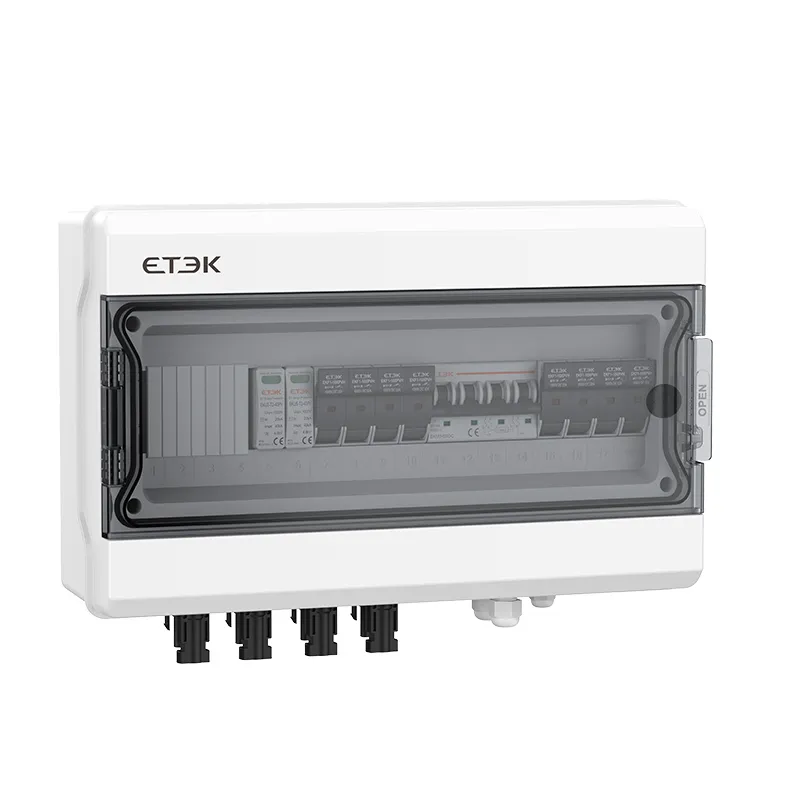
When designing a photovoltaic (PV) system, most of the attention goes to solar panels, inverters, and mounting structures. But what about the small component that stands between a smoothly running array and a dangerous electrical fire? Circuit breakers for PV systems are often overlooked, yet selecting the wrong one can lead to nuisance tripping, equipment damage, or even arc faults.
In my years of troubleshooting residential and commercial solar installations, I’ve seen too many cases where a “cheap” breaker caused weeks of downtime. One client’s 50kW rooftop array kept shutting down every afternoon – the culprit was a standard AC breaker used on the DC side, which couldn’t handle the continuous current from high-irradiance conditions.
So how do you choose the right protection device for your solar field? Here are five field-tested tips to guide your decision.
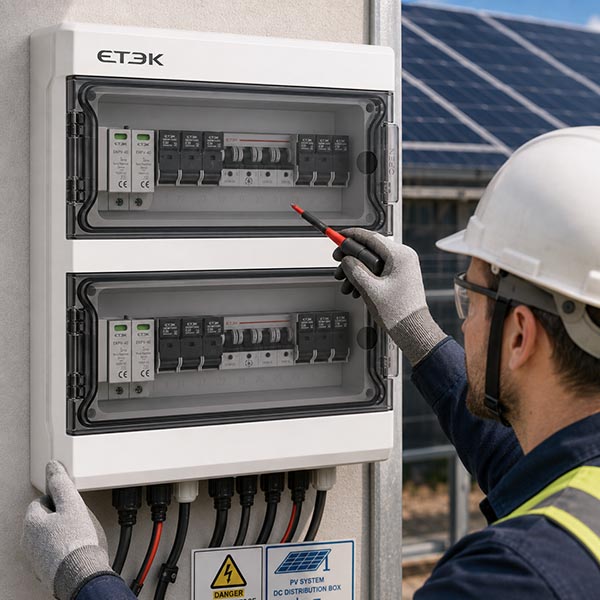
Match Voltage and Current Ratings with Real Operating Conditions
The first mistake is relying solely on nominal system voltage. PV arrays often operate at higher voltages, especially in cold climates where panel VOC can rise 15–20% above the STC rating. For a system with 150VDC nominal string voltage, you need a device rated at least 200VDC to avoid arcing.
Similarly, current rating isn’t just about summing panel Isc. Consider the 1.25x continuous current rule (NEC 690.9) and temperature derating. A 20A string may require a 32A-rated device if the breaker sits in a hot rooftop enclosure.
Understand Trip Characteristics
PV circuits have unique startup behaviors. Inverters and charge controllers often draw high inrush currents for a few milliseconds, but solar panels themselves are current-limited sources. The most common nuisance tripping in PV systems comes from using a curve B breaker on a circuit with frequent small overloads from partial shading or cloud edge effects.
For most PV string applications, curve C (5-10x In) offers a good balance. However, if you have high capacitive loads, curve D (10-20x In) may be necessary.
Always check the manufacturer’s time-current curve for DC operation – some devices behave differently on DC than on AC.
Verify Adequate Breaking Capacity
This is where many budget breakers fail catastrophically. The breaking capacity (Icu) is the maximum fault current a breaker can interrupt without welding contacts or exploding. For PV systems, available fault current depends on:
-
Battery bank size
-
Parallel string contributions
-
Grid-tied inverter backfeed
A typical residential PV string might see 2-5kA fault current, but large commercial arrays with 10+ parallel strings can exceed 10kA DC. IEC 60947-2 requires DC breakers to be tested with specific time constants – never assume an AC-rated Icu applies to DC.
Recommendation: Choose a device with Icu at least 1.25x the calculated maximum short-circuit current at the point of installation. For most rooftop systems, 10kA DC is a safe floor, while 15kA or 25kA provides headroom for future expansion.
Consider Environmental Factors
Outdoor PV combiner boxes face heat, humidity, dust, and sometimes direct rain. A breaker with IP20 is fine inside a weatherproof enclosure, but if you’re using an open rack or a combiner with IP65, the breaker itself should still be rated for at least a -25°C to +70°C operating range.
One often-ignored factor: altitude. Above 2000m, air density drops, reducing arc quenching capability. Manufacturers typically provide derating curves – a breaker rated 600VDC at sea level may only handle 480VDC at 3000m.
Also, if the breaker has external operating handles or knockouts, check UV resistance. Sunlight degrades standard thermoplastics in 2-3 years, leading to brittle cracking.
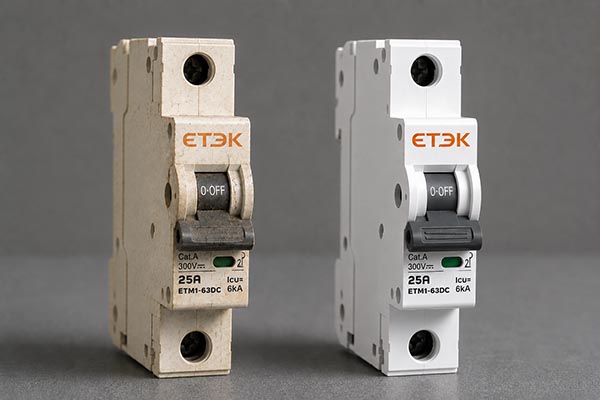
Look for Relevant Certifications
Uncertified breakers are a fire waiting to happen. For DC PV applications, the most recognized standards are:
-
IEC 60947-2
-
UL 489
-
UL 1077
-
IEC 60898-2
Additionally, the IEC 61439-2 series covers assembly requirements for low-voltage switchgear. For PV-specific performance, look for breakers that have passed IEC 60947-2 Annex M.
Always request test reports from third-party labs like TÜV, Intertek, or VDE. A CE mark alone is not sufficient – it’s self-declared for most breakers.
Soft Brand Integration & Call to Action
After walking through these five tips, you might realize that finding a breaker that ticks all boxes – correct voltage/current, appropriate trip curve, high breaking capacity, rugged environmental design, and full certifications – is not trivial. Many generic components fall short on one or more parameters.
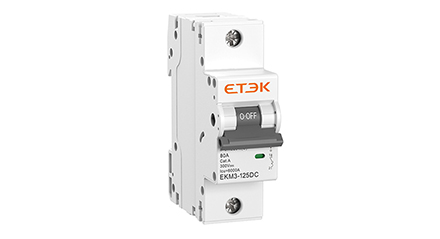
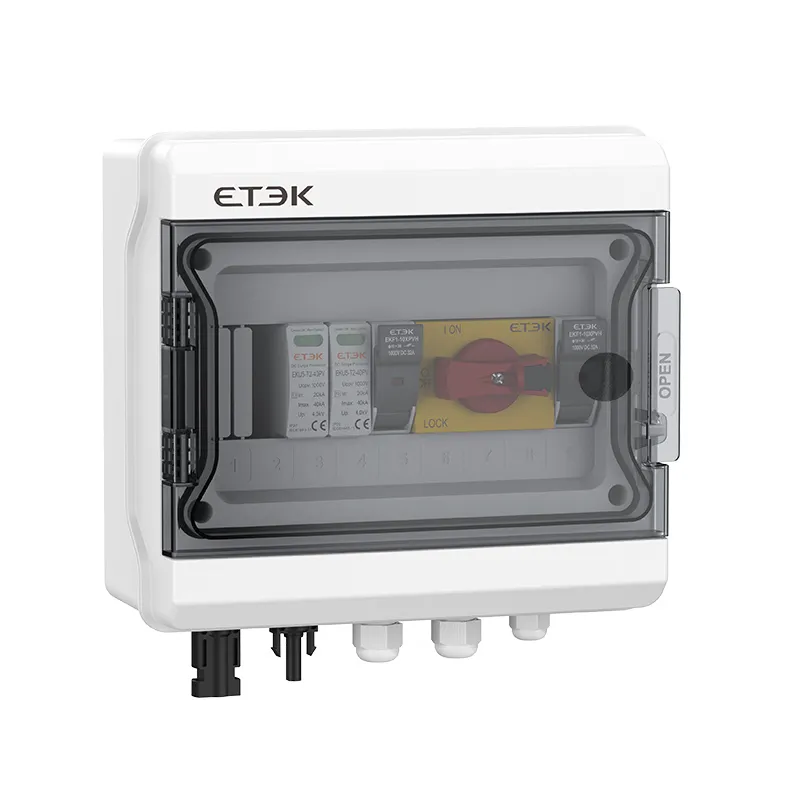
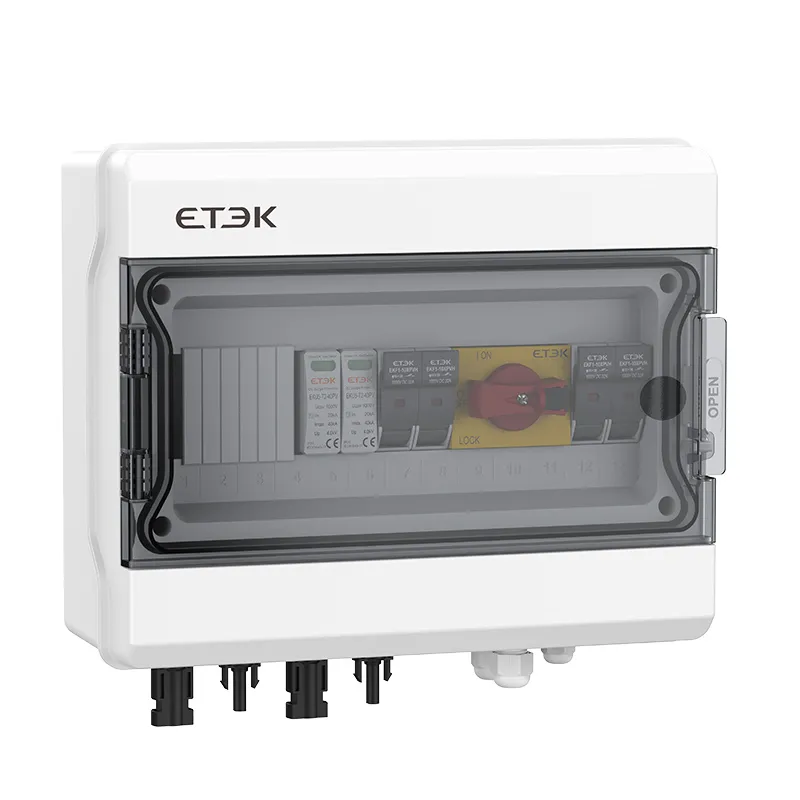
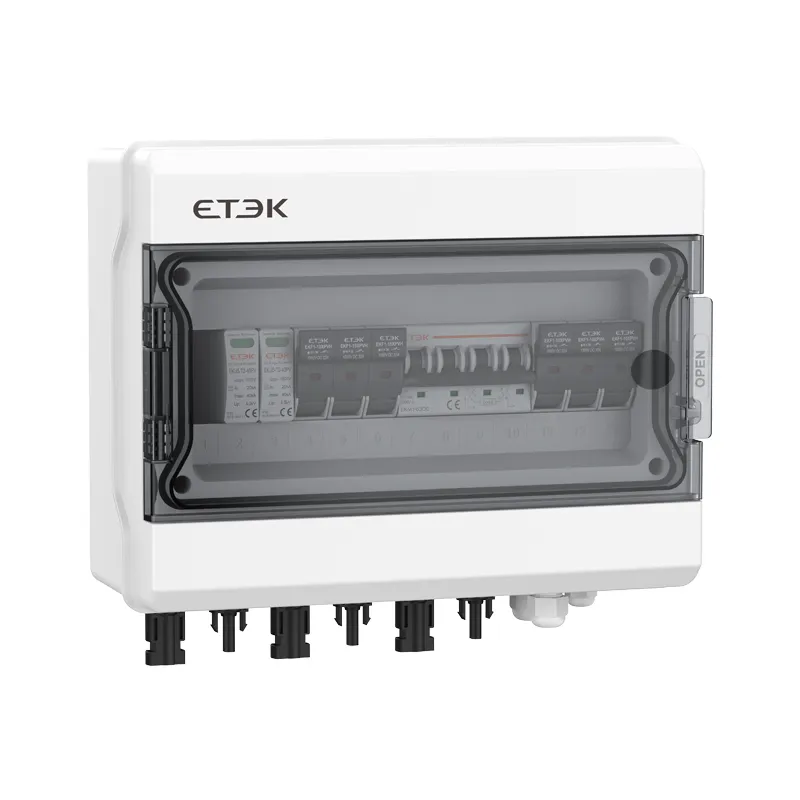
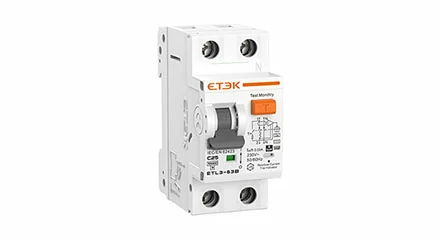
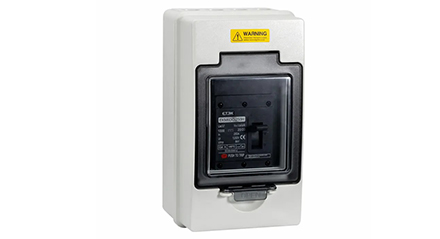
If you need a reliable source for solar-grade overcurrent protection, consider the range from ETEK. Their photovoltaic-rated devices are built with high-grade thermoplastics, tested to 15kA breaking capacity at 1000VDC, and carry TÜV and CE certifications per IEC 60947-2.
Whether you are assembling a small off-grid cabin or a 500kW commercial array, having consistent, field-proven protection components can save you from callbacks and safety hazards.
For detailed specifications and to find the right model for your system voltage and current, explore ETEK’s photovoltaic circuit protection solutions. You can also request a customized selection guide based on your panel string configuration and local climate conditions.
References & Disclaimer
-
NEC 2020, Article 690 – Solar Photovoltaic Systems
-
IEC 60947-2: Low-voltage switchgear and controlgear – Part 2: Circuit-breakers
-
UL 489 Standard for Safety for Molded-Case Circuit Breakers, Molded-Case Switches, and Circuit-Breaker Enclosures
-
Field data from SolarPro magazine (2022) “DC Breaker Failures in Rooftop Arrays.”
This article is for informational purposes only. Always consult a licensed electrician or engineer for final system design.
-1640.jpg)