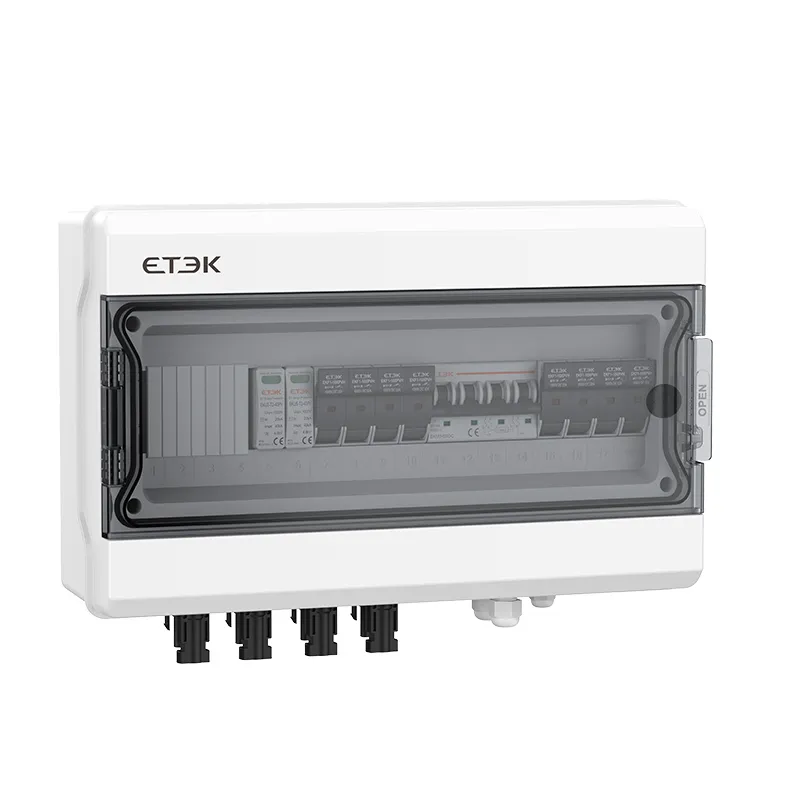
A solar installer in Spain once called me with a puzzle. He had installed 200 “DC-rated” protection devices on a 1000V rooftop array. Six months later, three units failed—two melted, one didn’t trip at all. The supplier pointed to a label reading "IEC 60898".
But 60898 is an AC standard. The devices had never been tested for DC arc extinguishing. This confusion is everywhere. Many buyers assume that if a device carries an IEC number, it’s suitable for solar DC. That assumption can burn down a combiner box.
Let’s unpack the two dominant standards—IEC 60898 and IEC 60947‑2—and see which one actually belongs in your photovoltaic system.
Why Standards Matter for DC Solar
Standards define how a device is tested, what faults it can clear, and how long it lasts. For DC solar applications (600V to 1500V), not all certifications are equal.
-
IEC 60898 – Originally written for household AC miniature breakers (MCBs). It covers short-circuit tests up to 10kA at 230/400V AC. DC testing is not required, and most devices certified to 60898 have no validated DC performance.
-
IEC 60947‑2 – A more rigorous standard for industrial protection devices, often called “moulded case circuit breakers” or high-performance MCBs. It includes explicit DC test requirements at specified voltages and time constants (e.g., 1ms for batteries, 5ms for PV).
Key Differences – What to Look For
| Feature | IEC 60898 | IEC 60947‑2 |
|---|---|---|
| Primary application | Household AC final circuits | Industrial distribution, motor circuits, DC systems |
| DC testing required? | No (optional add‑on, rarely done) | Yes – mandatory for DC ratings |
| Voltage range DC | Not specified (usually ≤125V if tested) | Up to 1500V DC, depending on the manufacturer |
| Time constant | Not applicable | 1ms, 5ms, or 15ms (matches real DC sources) |
| Arc extinguishing hardware | Not required | Required (arc chute + often magnetic blowout) |
| Interrupting capacity (Icn) | Typically 3kA–10kA AC | 10kA–100kA DC (voltage‑dependent) |
| Endurance (electrical) | 4,000–10,000 operations | 8,000–20,000+ operations |
| Typical solar use | Unsafe for PV strings >48V | Suitable for 600V, 1000V, 1500V DC |
Why 60947‑2 Is the Right Fit for Solar DC
Photovoltaic circuits are not household lighting loops. They operate at high DC voltage, often outdoors, with fault currents that may come from both the array and batteries. IEC 60947‑2 addresses three critical needs:
1. Verified DC interrupting capacity
The standard requires tests at the actual DC voltage and with the correct time constant (1ms for batteries, 5ms for PV). A device rated 10kA at 600V DC under 60947‑2 has proven it can interrupt a realistic DC arc.
2. Polarity and direction handling
Many 60947‑2 devices include polarised magnetic blowout and clear +/- markings. This is essential for rooftop combiner boxes where reverse wiring is a common mistake.
3. Higher mechanical and electrical endurance
Solar inverters can cycle daily. A 60898 device may wear out after 4,000 operations; a 60947‑2 unit typically exceeds 10,000 cycles, often 20,000.
Real‑World Consequences of Using 60898 in Solar
A German PV institute tested two identical-looking protection devices: one certified to 60898 (with a “DC capable” sticker), the other to 60947‑2 (with documented DC ratings). At 600V DC and 30A fault current:
-
The 60898 device failed to extinguish the arc. Contacts welded shut, housing cracked, and a sustained arc burned the test fixture.
-
The 60947‑2 device cleared the fault in 2.8 milliseconds. Post‑test, it still operated manually.
In another case, a commercial storage project in the UK used 60898 “DC” breakers for battery disconnection. After a cell internal short, the protection device did not trip—the battery rack continued to feed the arc until the entire string was destroyed. The forensic report cited “use of AC‑rated protection not compliant with IEC 60947‑2 for DC fault interruption.”
How to Read a Datasheet – Quick Verification
When evaluating a protection device for solar DC, check for these four items:
-
Standard cited – Look for “IEC 60947‑2” (or UL 489 for North America). If you see only IEC 60898, walk away.
-
DC voltage rating – Must be at least your array’s Voc at minimum temperature (e.g., 1000V DC, 1500V DC).
-
DC interrupting capacity – e.g., “Icn = 10kA at 600V DC, time constant 5ms.”
-
Polarity marking – Permanent +/- or arrow on the housing.
If those details are missing, the device is not certified for solar DC.
Common Objections – And Why They Don’t Hold
“But my 60898 device says DC on it.”
A sticker is not a test report. Some manufacturers self‑declare DC capability without third‑party verification. Only IEC 60947‑2 (or equivalent UL) provides mandatory, audited DC testing.
“My system is only 48V – does it matter?”
At low voltage (e.g., 48V battery bank), some 60898 devices may work because the arc is less energetic. However, for any grid‑connected solar array (typically 150V–1500V DC), you must follow the component standard required by local codes (e.g., IEC 62548 or NEC 690). In most jurisdictions, 60898 alone is not acceptable for source circuits.
“IEC 60947‑2 devices cost more.”
Yes – because they contain real arc chutes, magnetic blowout, and tested materials. The extra cost is usually under 15perunit.Comparethattoasinglecombinerboxfireinvestigation(15perunit.Comparethattoasinglecombinerboxfireinvestigation(5k+) or downtime ($1k/day). Cheap is expensive.
Making the Switch – Specifying the Right Protection
If you are designing or upgrading a solar PV system, moving to IEC 60947‑2 compliant protection devices is a straightforward upgrade:
-
Replace any 60898 “DC” devices in your combiner boxes with 60947‑2 certified units.
-
Verify that the new devices have the same footprint (most DIN‑rail 60947‑2 units are physically compatible).
-
Check polarity marking before terminating.
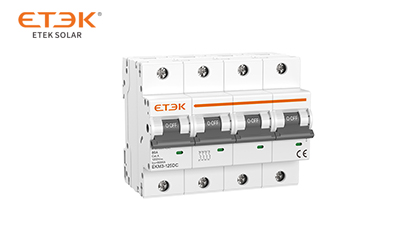
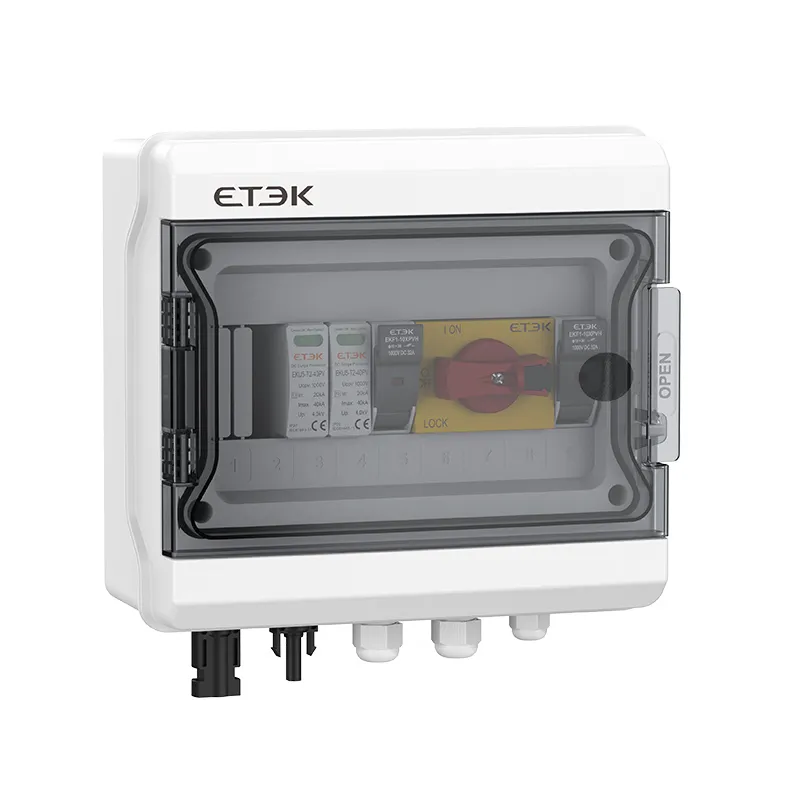
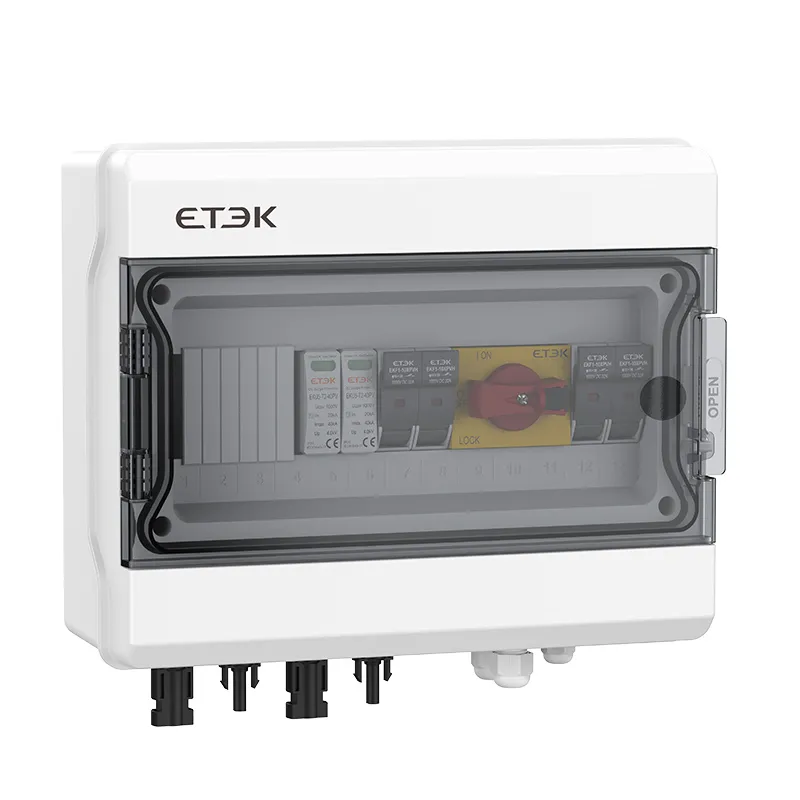
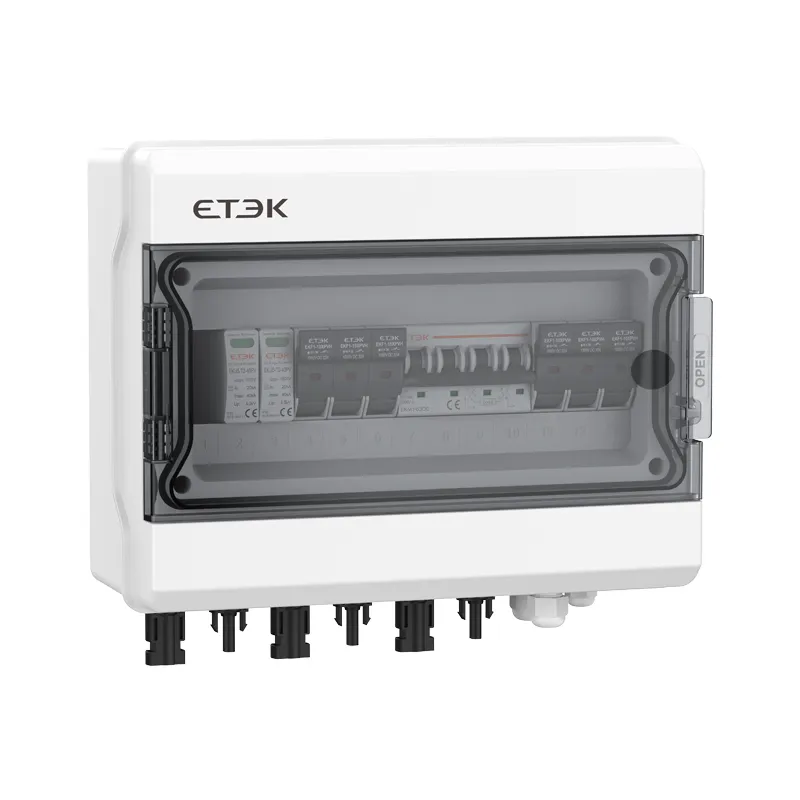
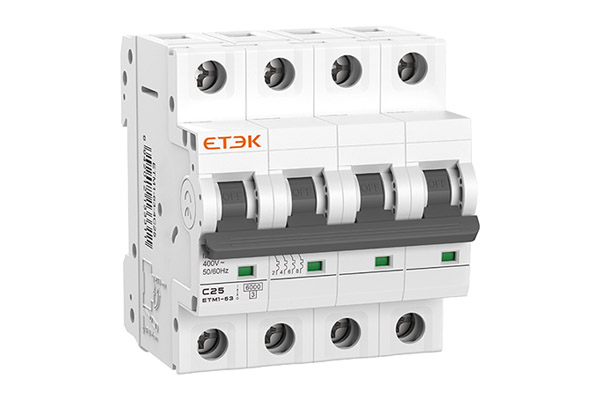
For system owners or installers who want to see a full range of IEC 60947‑2 solar DC protection devices with documented test reports, explore ETEK's 60947‑2 compliant lineup. Each model includes time‑constant data and interrupting capacity at 600V, 1000V, or 1500V DC.
The Bottom Line
Standards exist to prevent exactly the kind of failures we see every year. IEC 60898 is a fine standard for AC lighting and sockets inside a house. For DC solar arrays, especially at 600V and above, you need the robustness of IEC 60947‑2. Don't let a cheap sticker put your system at risk.
References & Notes
-
IEC 60898‑1:2019 – Electrical accessories – Circuit‑breakers for overcurrent protection for household and similar installations (AC only).
-
IEC 60947‑2:2020 – Low‑voltage switchgear and controlgear – Part 2: Circuit‑breakers (includes DC test requirements).
-
IEC 62548:2016 – Photovoltaic (PV) arrays – Design requirements (references 60947‑2 for DC protection).
-
VDE study: “Performance of AC‑rated breakers under DC fault conditions” (2020).
-
NFPA (Fire Protection Research Foundation) 2021 – DC Arc Faults in PV Systems.
*Disclaimer: This article provides general technical guidance. Always consult local electrical codes (IEC 60364, NEC, or AS/NZS 5033) and work with licensed professionals when selecting protection devices for solar installations.*
-1640.jpg)
 - Enterprise-Protection-Solution-1052.webp)