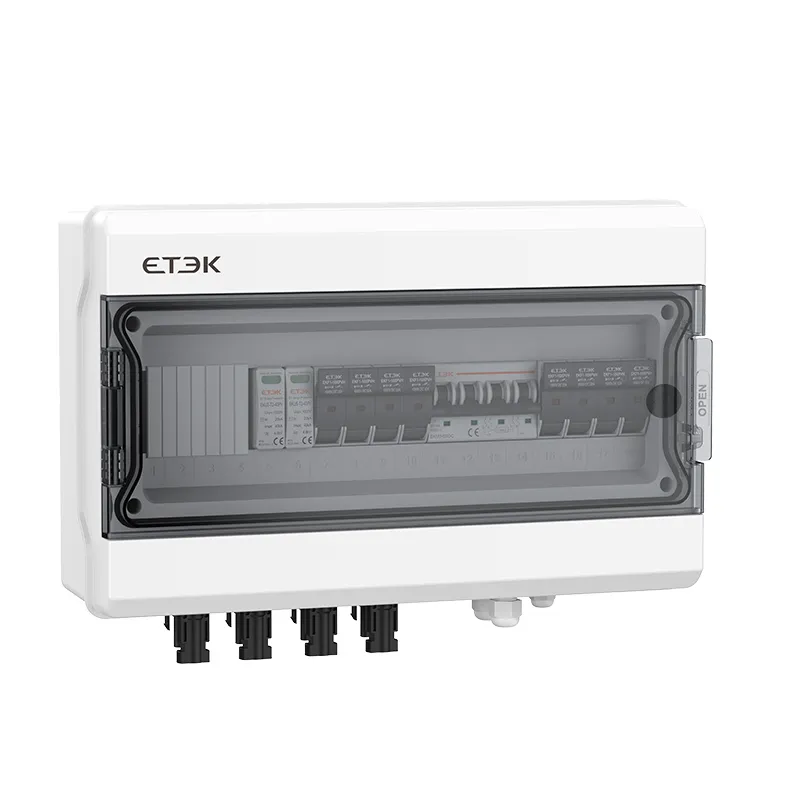
When a solar farm in California lost 12 panels to a cascading fire last year, investigators traced the cause back to a single loose connection. The resulting DC arc sustained itself for less than a second—but that was enough to melt copper, ignite insulation, and bring down a whole string.
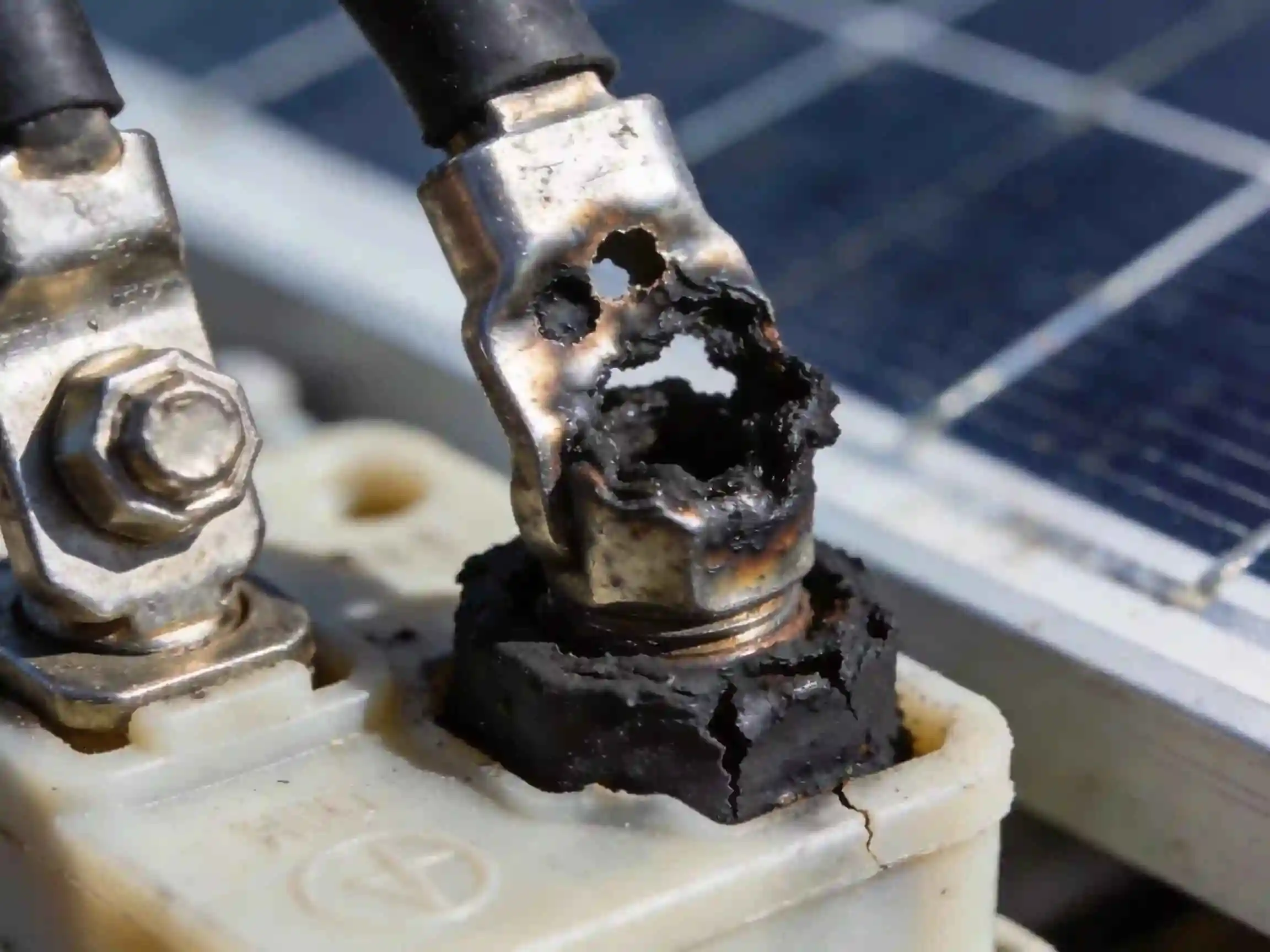
This scenario is far from rare. Unlike AC arcs, which have a natural zero crossing every cycle, DC arcs have no such interruption. Once formed, they can burn steadily at thousands of degrees Celsius until the energy source is physically removed. For photovoltaic systems operating at 600V, 1000V, or even 1500V DC, the challenge is real—and the stakes are high.
So how do modern solar protection devices actually put out these stubborn DC arcs? Let’s open the box and look at the physics.
Why DC Arcs Refuse to Die
To extinguish any arc, you need to do one of three things: cool the plasma, stretch the arc path, or rapidly reduce the current below the sustaining threshold. AC arcs self-extinguish at zero voltage 100 or 120 times per second, which is why a standard household breaker designed for AC can sometimes interrupt a low-voltage DC arc—but not reliably at high voltage or current.
In DC circuits, once an arc forms between opening contacts, the available system voltage continuously pushes current through the ionized gas. Without a natural zero point, the arc can re-strike repeatedly. This is why a circuit breaker rated only for AC may fail catastrophically in a solar combiner box. According to UL 489 and IEC 60947-2 standards, DC-rated devices must undergo additional testing at specified time constants—something many generic units skip.
Three Engineering Tricks That Kill DC Arcs
Specialized solar overcurrent protection devices (we’ll avoid overusing the technical term) employ three core mechanisms working together.
1. Magnetic Blowout – Using the Arc’s Own Energy
A permanent magnet or coil is placed near the moving contact. When an arc forms, the current flowing through the arc creates a magnetic field that interacts with the fixed magnet. The resulting Lorentz force pushes the arc sideways—away from the contacts and into an arc chute. This “magnetic blowout” effect stretches the arc rapidly, increasing its resistance until it can no longer sustain itself.
In high-quality solar disconnects, the magnet polarity is carefully aligned with the expected DC current direction. Some designs use two opposing magnets to handle reverse current.
2. Arc Chutes – Splitting and Cooling
Once the arc enters the arc chute—a stack of parallel metal plates—each plate splits the arc into smaller series arcs. These “sub-arcs” have higher total voltage drop because of the cathode and anode fall regions near each plate. The voltage across the entire stack quickly exceeds the system voltage, starving the arc. Meanwhile, the plates absorb heat from the plasma, accelerating deionization.
A well-designed arc chute can quench a 1500V DC arc in less than 3 milliseconds. The plate material (typically ferromagnetic or copper alloy) and spacing are critical. Too narrow, and the arc might bypass the plates; too wide, and the cooling effect diminishes.
3. Fast Contact Separation & Arc Runner
The speed at which contacts open directly affects arc energy. Solar-rated devices use spring-loaded mechanisms or even repulsion contacts that blow open faster than the actuator can move. Some advanced designs add an “arc runner”—a conductive path that guides the arc away from the contacts before it can melt them.
How This Differs from Ordinary AC Protection
| Feature | Standard AC Protector | Solar DC Protector |
|---|---|---|
| Arc extinguishing reliance | Natural zero crossing | Magnetic blowout + arc chute |
| Voltage rating | 120/240V AC | Up to 1500V DC |
| Time constant testing | Not required | Required (e.g., 1ms or 5ms) |
| Polarity sensitivity | No | Yes (often marked +/-) |
| Typical applications | Home panels | PV strings, inverters, batteries |
Many installers assume that a circuit breaker with a DC label will work—but without proper arc chutes and magnetic blowout, it’s a gamble. In one documented test by a German PV institute, generic “DC-rated” units failed to interrupt a 300V/30A arc, while a properly engineered solar disconnect cleared the same fault in under 2ms.
Common Misconceptions and Field Mistakes
-
Myth 1: “Higher ampere rating means safer.”
Wrong. A 63A device may have slower trip characteristics than a 32A unit, allowing more arc energy to develop. Always match the short-circuit interrupting rating (Icn or AIC) to your system’s available fault current. -
Myth 2: “I can use two AC breakers in series for DC.”
This dangerous practice does not guarantee arc extinction. The second breaker will see the same arc—and likely fail as well. -
Myth 3: “All solar disconnects are the same.”
Not even close. Look for third-party certifications like UL 489 (for branch protection) or UL 1077 (supplementary). For photovoltaic source circuits, UL 1741 or IEC 60947-3 with DC ratings is essential.
How to Choose the Right Solar Protection Device
When evaluating options for your combiner box, recombiner, or battery disconnect, ask these three questions:
-
What is the maximum system voltage (Voc at lowest temperature)?
Always derate – a 1000V DC device is not safe for a 1000V string under cold conditions when voltage rises. -
Does it have verified arc chute and magnetic blowout?
Look for cutaway diagrams in datasheets. If the manufacturer doesn’t show internal construction, be skeptical. -
What’s the time constant of the test circuit?
DC arcs behave differently at 1ms (typical for batteries) vs 5ms (typical for PV). Your device should be tested at the time constant matching your application.
For large-scale solar plants, you may also want remote trip capability, auxiliary contacts for monitoring, or IP66 protection for outdoor enclosures.
Beyond the Breaker – System-Level Arc Mitigation
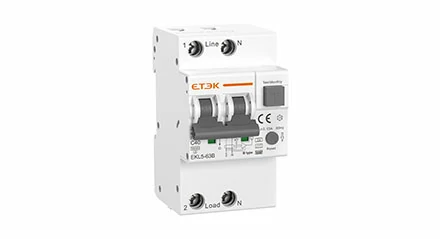
While the core protection device handles overcurrent arcs, modern solar systems also deploy arc-fault circuit interrupters (AFCIs) to detect series arcs caused by broken conductors or loose terminals. A complete safety strategy combines:
-
Proper torque tools for terminal connections
-
Regular thermal imaging of combiner boxes
-
Protection devices that meet both overcurrent and arc-fault standards (UL 1699B for PV)
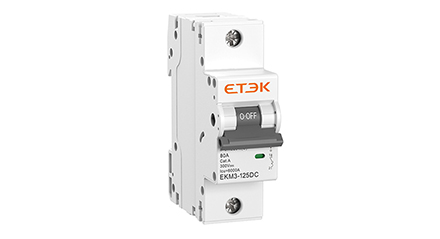
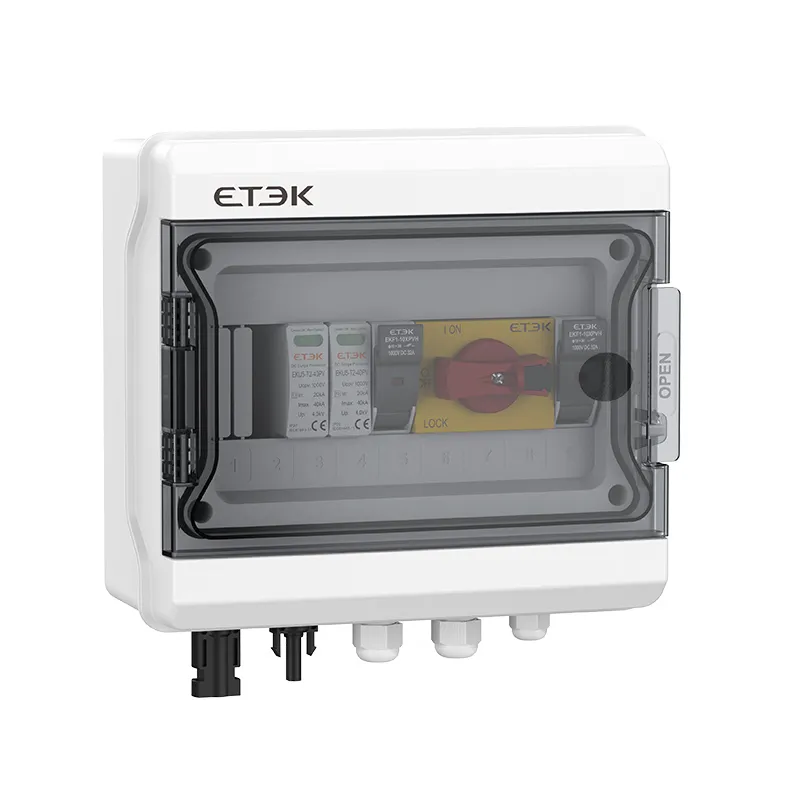
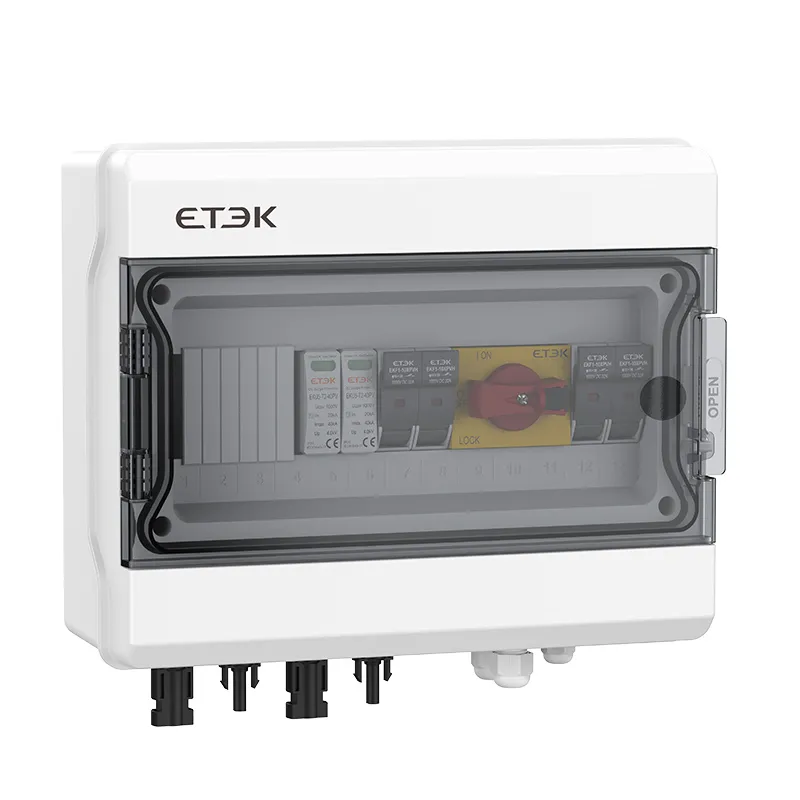
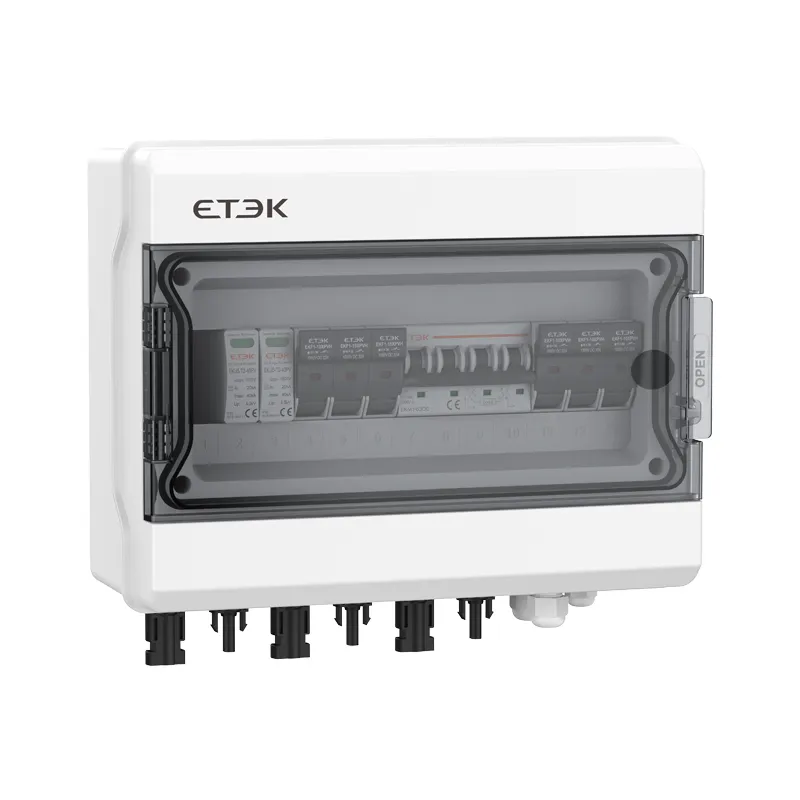
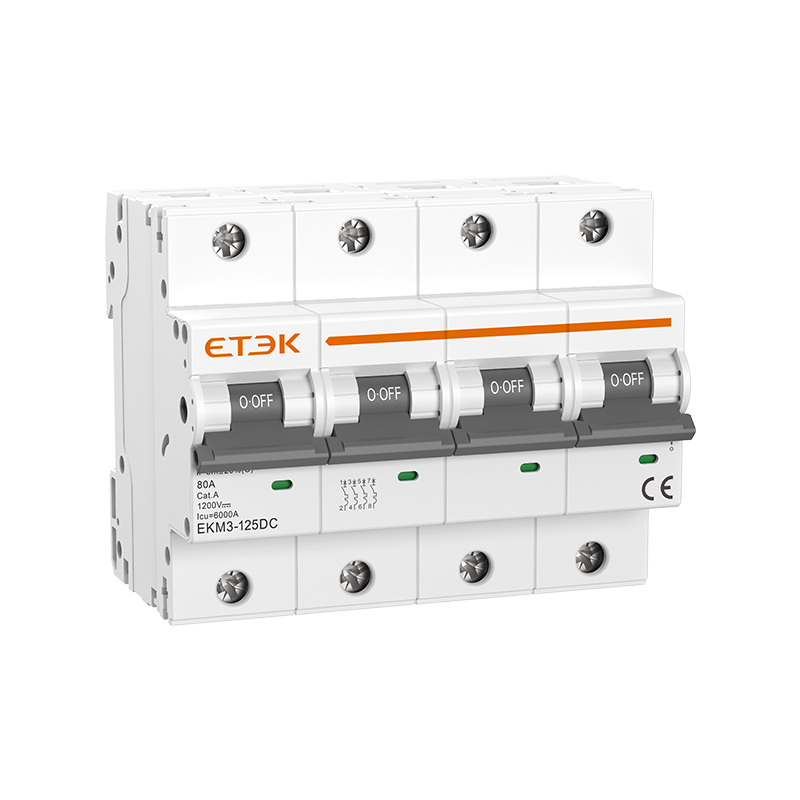
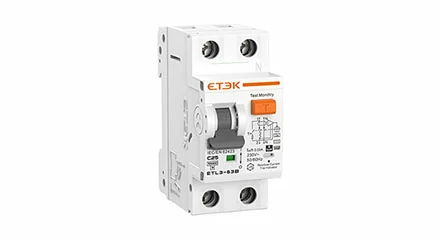
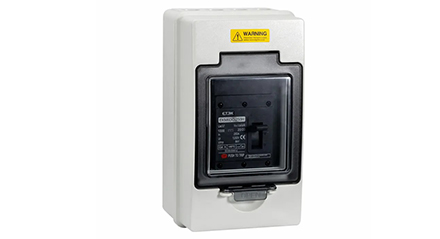
If you’re designing or maintaining a photovoltaic system and want to see how these arc-extinguishing mechanisms are implemented in real products, explore ETEK’s solar-rated protection lineup – each unit includes detailed arc chute specifications and time-constant test reports.
Final Thought: Don’t Underestimate the DC Arc
A millisecond of sustained DC arc can turn a routine maintenance shutdown into a disaster. The physics are unforgiving, but the engineering solutions are mature and proven. By choosing devices with true magnetic blowout, optimized arc chutes, and proper DC certifications, you’re not just protecting wires—you’re protecting livelihoods.
Have you ever witnessed a DC arc failure in the field? Or struggled with selecting the right protection for a 1500V string? Share your experience in the comments – real-world cases help everyone build safer solar systems.
Disclaimer: This article provides general technical information. Always consult a licensed electrical engineer and follow local codes (NEC 690, IEC 62548) when designing PV systems.
-1640.jpg)