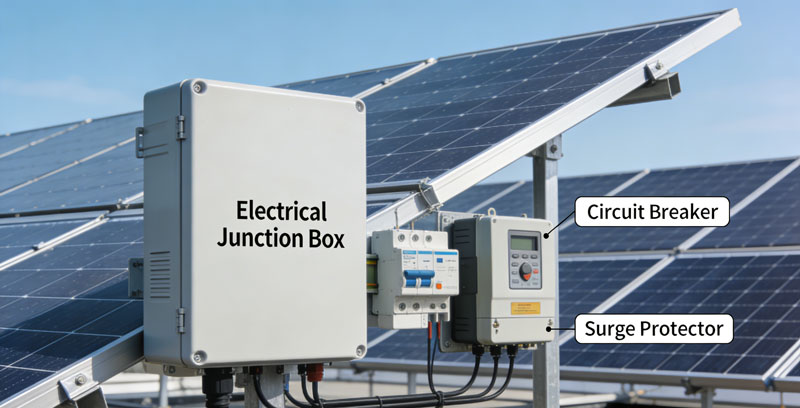
Last year, a solar installer in California called me with a problem: three of his residential systems had experienced nuisance tripping during morning fog. The culprit? A mismatch between the residual current protection device and the inverter’s leakage characteristics. He had used standard AC-side breakers on DC circuits—a surprisingly common error.
Solar PV systems present unique electrical hazards that ordinary protection gear wasn’t designed to handle. DC arcs don’t self-extinguish like AC arcs. Fault currents can flow in both directions. And leakage current from PV modules changes with irradiance. So how do you choose protection that actually works?
This guide walks through the four critical layers of solar electrical protection, the key specifications to verify, and the traps that cost installers time and money.
1. Overcurrent Protection: Fuses vs. Circuit Breakers
Every PV string and combiner box needs overcurrent protection to handle reverse currents and short circuits. The two main options are DC-rated fuses and DC circuit breakers.
DC fuses are simple and inexpensive. They handle high interrupt ratings (typically 10kA to 20kA) and work reliably for strings with stable currents. But they’re one-time use—after a fault, you replace them. In remote sites, that means a service visit.
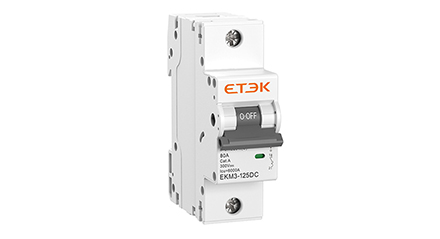
DC circuit breakers can be reset after a fault. However, not all breakers labeled “DC” are created equal. Look for:
-
Pole configuration: For ungrounded PV systems, you need double-pole breakers that disconnect both positive and negative conductors.
-
Interrupting rating: Must exceed the maximum possible fault current from the array plus the battery bank (if present). NEC 2023 requires minimum 10kA for most residential PV.
-
Time-current curve: Choose “slow trip” (curve C or D) to avoid nuisance trips from inverter inrush currents, which can be 3-5x nominal for 20-50 milliseconds.
A frequent mistake: using AC breakers on DC circuits. AC breakers rely on the zero-crossing of AC waveform to extinguish the arc. DC current has no zero-crossing, so the arc continues until the gap is wide enough—often causing contact welding or fire. Always verify the DC marking on the device.
2. Residual Current Protection for Solar (DC & AC Side)
This is where most confusion happens. Standard AC-type residual current devices (RCDs) cannot detect smooth DC leakage currents, which can arise from failed inverters or damaged cables. A smooth DC current above 6 mA can block the magnetic core of a standard RCD, making it blind to further AC faults.
For PV systems, you need one of the following:
-
Type B RCDs: Detect AC, pulsating DC, and smooth DC up to 6 mA. Suitable for single-phase inverters without galvanic isolation.
-
Type B+ RCDs: Detect smooth DC up to 30 mA or more. Required for three-phase inverters or systems with battery storage.
-
Residual current monitoring (RCM) units: Used in large commercial systems where RCDs would cause too many nuisance trips. RCMs only monitor and alarm without tripping.
According to IEC 60364-7-712 (requirements for solar PV power supplies), any PV system with an inverter that lacks galvanic isolation must have residual current protection with smooth DC detection capability. Many installers overlook this until a fatal shock or fire occurs.
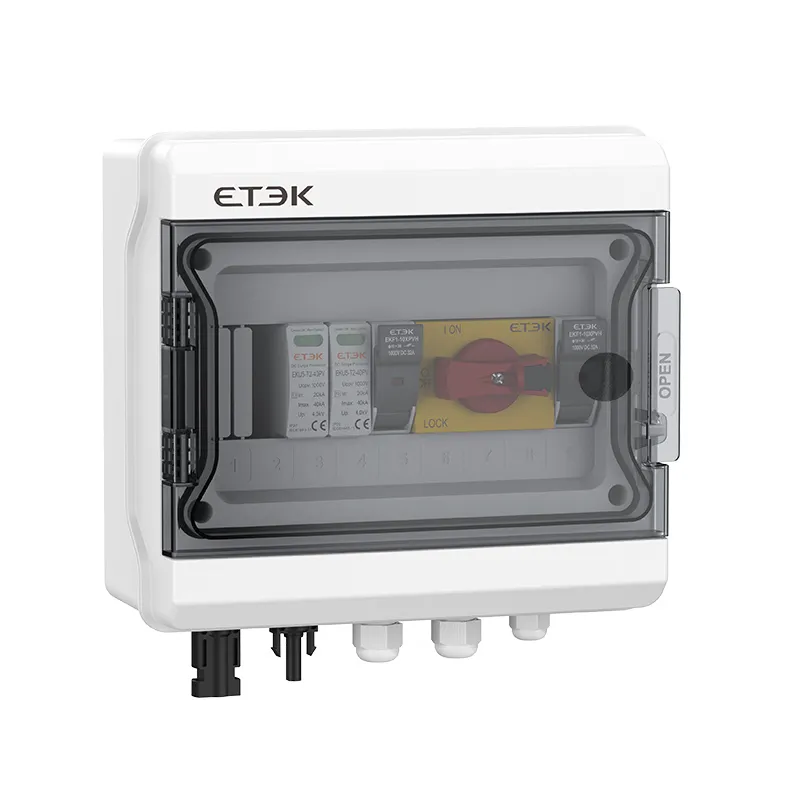
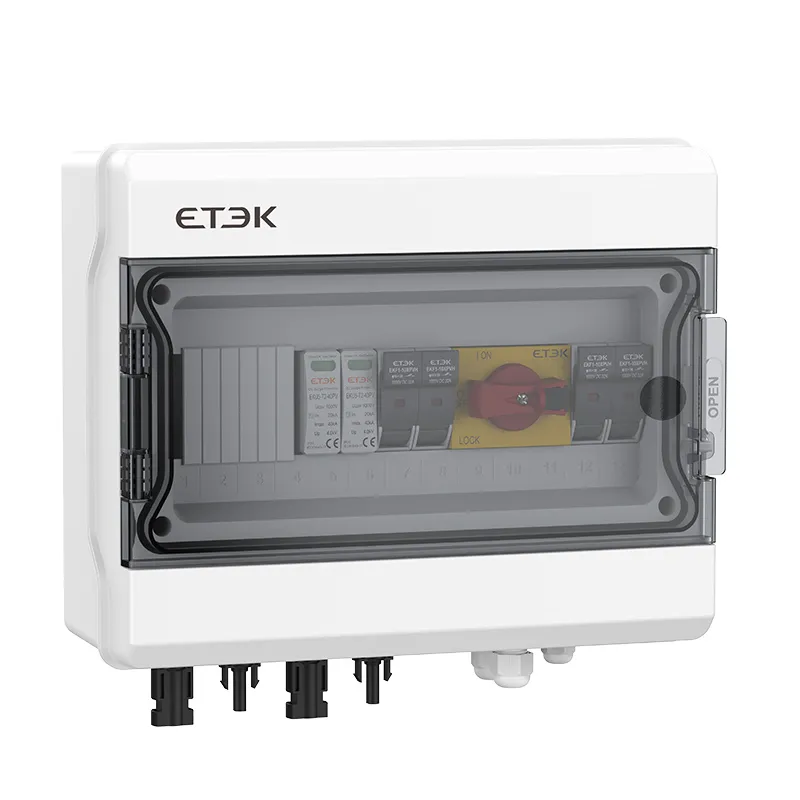
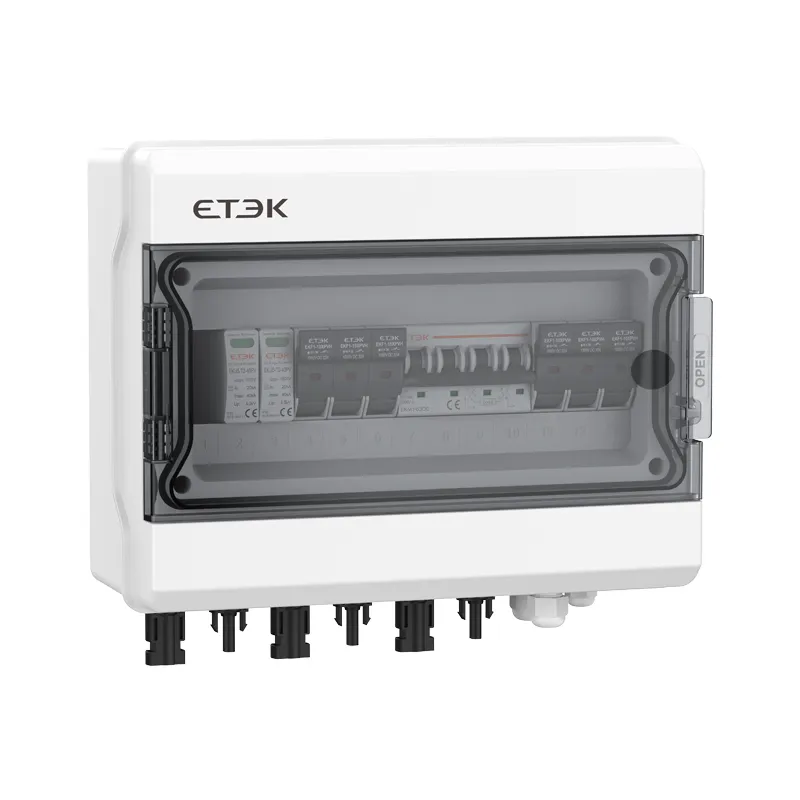
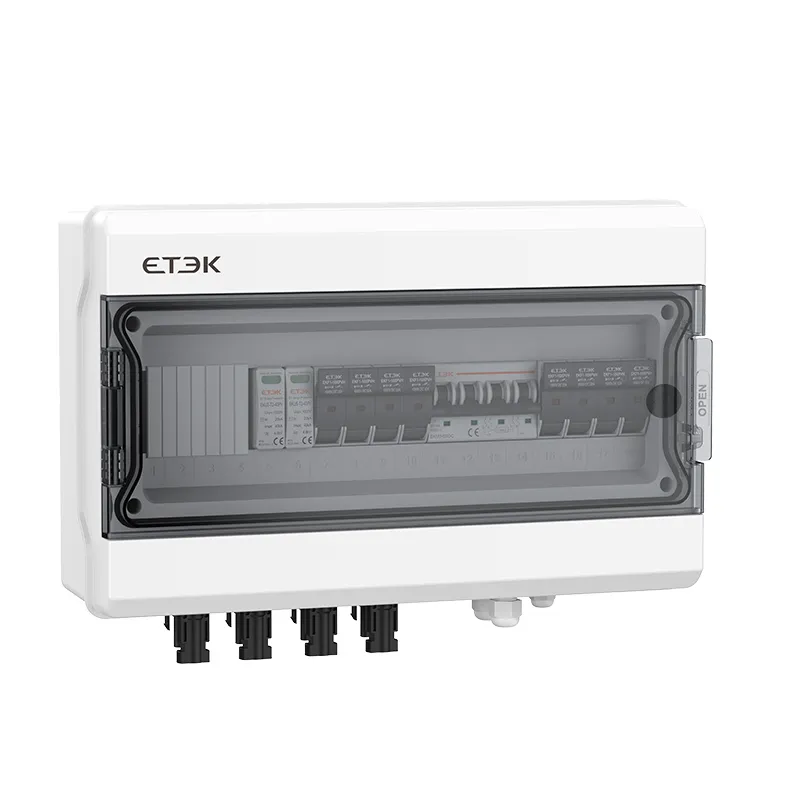
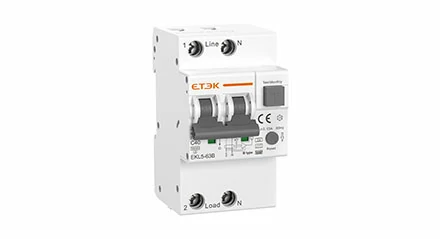
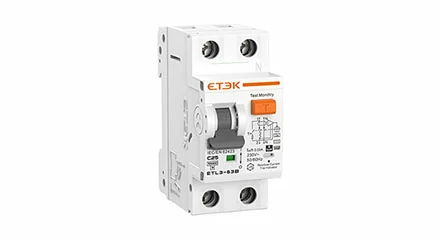
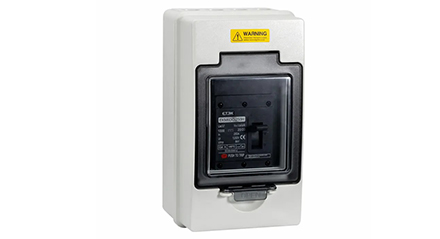
To see how a Type B residual current device is integrated into a complete solar combiner box, check ETEK’s solar protection lineup.
3. Surge Protection Devices (SPD) for PV
Lightning strikes don’t have to be direct to damage electronics. A strike 500 meters away can induce voltage surges of 2-6 kV on long DC cables running from the array to the inverter.
SPDs are classified into three types:
-
Type 1 (Class I): For service entrance or buildings with lightning rods. Handles direct strike partial current (10/350 µs waveform).
-
Type 2 (Class II): For sub-distribution panels. Handles induced surges (8/20 µs waveform). This is the minimum for most rooftop PV.
-
Type 3 (Class III): For sensitive equipment terminals, as a last line of defense.
Selection checklist for PV SPDs:
-
Voltage protection level (Up): Must be lower than the impulse withstand voltage of the inverter (typically 4 kV for 1000V DC systems). Aim for Up ≤ 2.5 kV.
-
Short-circuit withstand: SPDs must coordinate with upstream overcurrent protection. Look for “backup fuse” recommendations in the datasheet.
-
Degradation indicator: Green/red window shows when the varistor has worn out. Critical for remote sites without regular testing.
A real-world example: A 250 kW commercial PV plant lost two inverters within three months due to repeated small surges. Investigation found Type 2 SPDs installed 40 meters from the inverter—too far. The wiring inductance caused voltage spikes before the SPD could clamp. The fix: relocate SPDs within 1 meter of the inverter DC input.
4. Arc Fault Detection (AFD)
The National Electrical Code (NEC 2020 and 2023) requires arc fault circuit interruption (AFCI) for residential PV systems on building roofs. DC arcs can reach 3,000°C and ignite roof materials before any overcurrent device trips, because arc current is often below the breaker rating.
How AFD works: A dedicated circuit monitors high-frequency noise signatures characteristic of series arcing (a loose connection in the string) or parallel arcing (a short between conductors). When detected, it trips and disconnects the array.
What to look for:
-
Integrated AFCI inside the inverter or combiner box is preferred over add-on units.
-
The device must self-test periodically (every power-up or every 24 hours).
-
Look for UL 1699B certification (the standard for PV arc fault protection).
A caution: Some early AFCI devices had high nuisance trip rates during inverter startup or cloud-edge effects. Modern units use advanced DSP filtering. Ask the supplier about field performance data.
Comparison Table: Protection Device Types for Solar PV
| Protection Type | What it does | Typical Rating | Solar-Specific Requirement |
|---|---|---|---|
| DC Circuit Breaker | Overcurrent & disconnect | 10-63A, 500-1500V DC | Double-pole, DC-rated, curve C/D |
| Residual current device (Type B) | Earth leakage detection | 30-300 mA, 4-63A | Smooth DC detection up to 6 mA min |
| Surge protection (Type 2) | Voltage surge clamping | Up to 40 kA (8/20 µs) | Up ≤ 2.5 kV for 1000V systems |
| Arc fault detector | Series/parallel arc interruption | 0.5-20A DC | UL 1699B, self-test function |
Common Mistakes (From Field Reports)
After reviewing 47 solar installation audits conducted by a German testing lab (VDE, 2024), the top three protection errors were:
-
Using AC-rated breakers on DC strings – Happened in 22% of inspected sites. The consequence: breaker failed to clear a fault, causing fire in two cases.
-
Ignoring temperature derating – Protection devices installed in hot attics or on rooftops (ambient >50°C) without derating their current rating. A 20A breaker at 60°C may only carry 16A safely. NEC 310.15 provides derating tables.
-
Mixing brands – Using an SPD from brand A and a backup breaker from brand B without verified coordination. The breaker may trip before the SPD clamps, leaving the inverter unprotected.
Decision Flow: Matching Protection to Your System
Step 1 – Identify system type:
-
Small residential (≤10 kW, microinverters or string inverter with isolation) → Type B RCD + Type 2 SPD + optional AFCI (if on roof)
-
Large residential (10-30 kW, battery storage) → Type B+ RCD + Type 2 SPD + AFCI (required) + DC breaker per string
-
Commercial (≥30 kW, multiple strings) → RCM + Type 1 or 2 SPDs at each combiner box + fuse holders or DC breakers
Step 2 – Verify voltage and current:
-
String voltage (Vmp + 20% margin) must be ≤ device rated voltage.
-
String current (Isc × 1.25 per NEC 690.8) must be ≤ device continuous current rating.
Step 3 – Check environmental ratings:
-
Outdoor enclosures need IP65 minimum.
-
Operating temperature: -25°C to +60°C for most locations. Avoid devices rated only to 40°C.
If you need a quick reference table of solar-rated protection components with their key parameters, explore ETEK’s technical datasheets.
Maintenance and Testing Tips
Even the best protection devices require periodic verification:
-
Every 6 months: Push the test button on RCDs (should trip). Check SPD degradation windows.
-
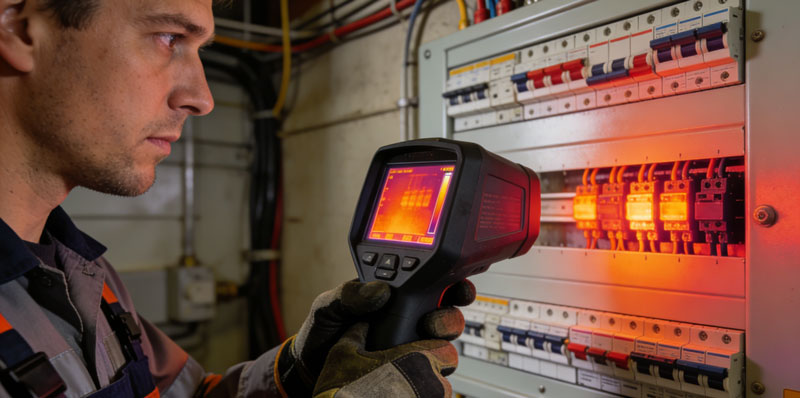
Annually: Measure insulation resistance of DC cables (should be >1 MΩ). Thermal image of breaker terminals (look for hot spots above 70°C).
-
After any lightning event within 1 km: Replace Type 2 SPDs—they absorb energy and degrade even without visible damage.
A solar farm operator in Texas shared their protocol: “We label every protection device with installation date and next test due. We also keep one spare SPD per 10 installed. Downtime costs us $500 per hour, so spares pay for themselves after one lightning storm.”
Final Thoughts: Build a Layered Defense
Solar electrical protection isn’t about picking one magic device. It’s a layered system: overcurrent for short circuits, residual current for ground faults, surge protection for transients, and arc fault for loose connections. Each layer addresses a different failure mode. Miss one, and you have a vulnerability.
Before buying, always request test reports showing the device’s performance at elevated temperatures and under PV-specific waveforms (pulsating DC, smooth DC). A supplier that can’t provide third-party test data (from TÜV, UL, or VDE) is asking you to trust unverified claims.
If you’re designing a solar combiner box or upgrading an existing PV system, get a customized protection selection checklist from ETEK’s engineering team.
References & Notes
-
NEC 2023, Article 690 – Solar Photovoltaic (PV) Systems
-
IEC 60364-7-712 – Requirements for special installations – Solar PV power supply systems
-
VDE 2024 field audit summary – “Protection Device Errors in Rooftop PV” (internal report, selected findings shared with permission)
-
UL 1699B – Standard for Photovoltaic Arc-Fault Circuit-Protection
Disclaimer: This article provides general guidance. Always consult a licensed electrician and comply with local electrical codes. Specifications and requirements vary by jurisdiction.
-1640.jpg)