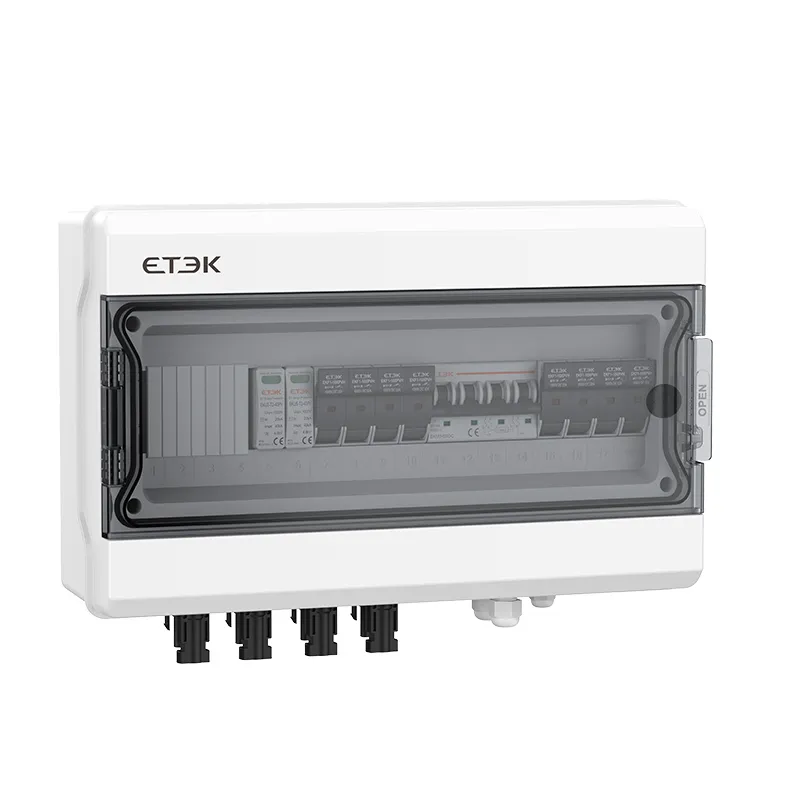
A 10kW solar system—whether residential rooftop or small commercial setup—demands precise, compliant protection to avoid costly downtime, equipment damage, and safety hazards. Circuit Breakers form the backbone of this protection, yet many installers cobble together mismatched components that fail to meet IEC standards or system-specific needs. According to the 2026 Global Solar PV Protection Report by SolarPower Europe, 58% of 10kW system failures stem from improper protection device selection, with 43% of those issues linked to non-compliant breakers. This guide cuts through technical chaos to deliver a field-proven breakdown of what a complete 10kW kit must include, and why ETEK’s purpose-built solutions outperform generic alternatives.
What Makes a 10kW Solar System’s Protection Needs Unique?
10kW systems operate at 300-1000VDC (PV array side) and 230/400VAC (grid-connected side), with typical string currents of 10-15A and inverter output currents of 40-50A. This sweet spot between residential and commercial systems requires a balance of compact design, high breaking capacity, and multi-functional protection—needs generic breakers often miss.
1. Voltage Compatibility Across DC/AC Zones
PV arrays in 10kW systems frequently reach 1000VDC under open-circuit conditions. Using a 600VDC-rated breaker here is a catastrophic mistake—I’ve seen arrays where undersized breakers melted during voltage spikes, destroying modules and inverters. A complete kit must include 1000VDC DC mini circuit breakers for the array side and 230/400VAC breakers for the inverter output.
2. Current Matching for String & Inverter Protection
Oversized breakers fail to trip during overloads; undersized ones trigger nuisance trips. For 10kW systems with 4-6 strings (10A per string), 16-20A DC breakers per string are ideal. The inverter output requires a 40-63A AC breaker to handle peak grid-connected currents.
3. Residual Current Protection for Personnel Safety
Transformer-less inverters in modern 10kW systems generate smooth DC residual currents—standard Type AC RCCBs can’t detect these, leaving installers at risk of electric shock. Type B RCCBs (sensitive to AC, pulsed DC, and smooth DC) are mandatory to meet IEC 62423 standards.
4. Compact Design for Rooftop/Indoor Installations
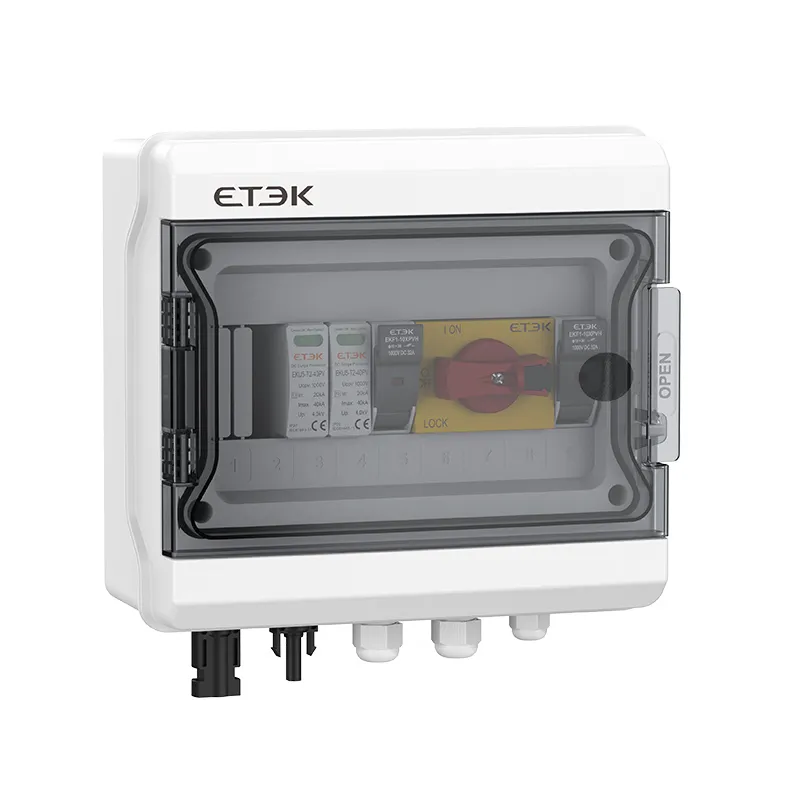
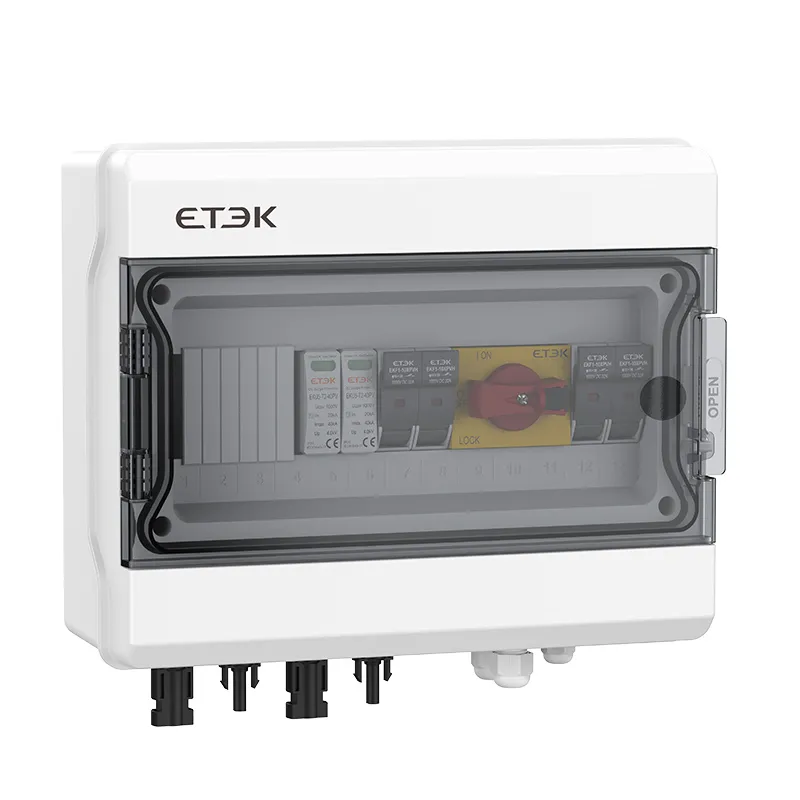
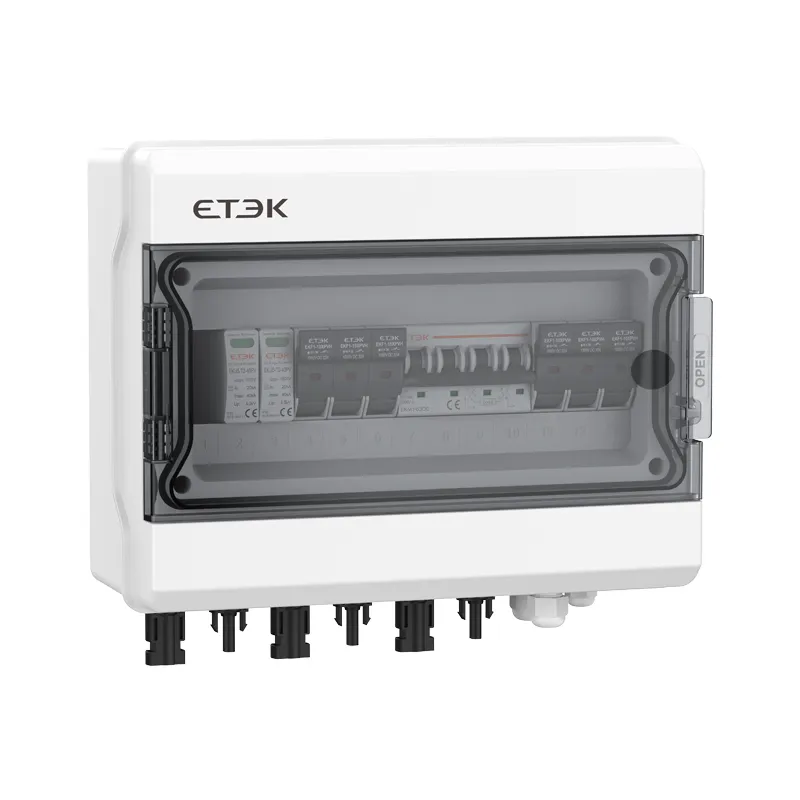
Most 10kW systems use wall-mounted inverter combiner boxes with limited space. Breakders with slim profiles (1P/2P configurations) and tool-less mounting save critical real estate without sacrificing performance.
To explore space-saving configurations for 10kW systems, you can view ETEK’s compact breaker lineup.
4 Non-Negotiable Components of a Complete 10kW Kit
A "complete" kit isn’t just a random set of breakers—it’s a coordinated system where every component works in tandem. Here’s what ETEK’s 10kW kit includes, based on thousands of successful installations:
1. DC Mini Circuit Breakers (String & Combiner Protection)
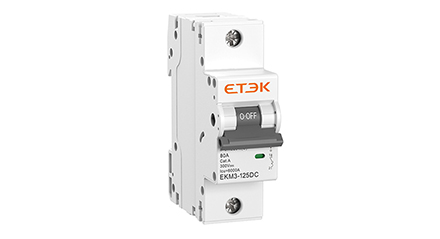
ETEK’s EKM1-63DC/125DC series checks all boxes for 10kW systems:
- Rated voltage: Up to 1000VDC (4P configuration)
- Current ratings: 16-20A (string protection), 63-125A (combiner box main protection)
- Breaking capacity: 6-10kA (handles short-circuit currents from PV arrays)
- Non-polarity design: Simplifies wiring and reduces installation errors
2. AC Mini Circuit Breakers (Inverter Output Protection)
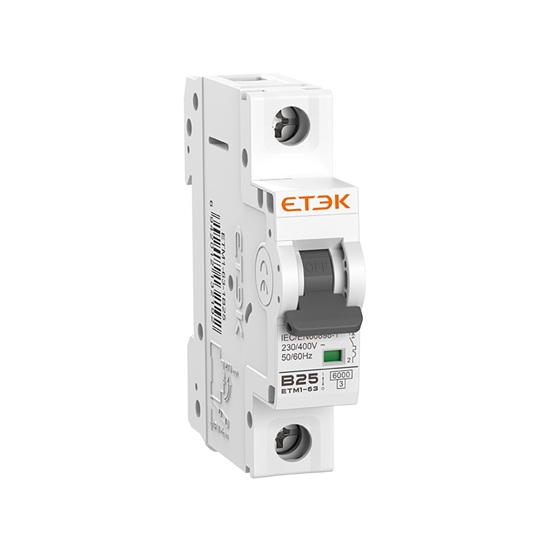
The ETM1-63 series is optimized for grid-connected 10kW systems:
- Rated voltage: 230/400VAC
- Current ratings: 40-63A (matches inverter output)
- Breaking capacity: 6-15kA (handles grid-side short circuits)
- Temperature compensation: Maintains consistent tripping from -25°C to +40°C
3. Type B RCCB (Personnel & System Protection)
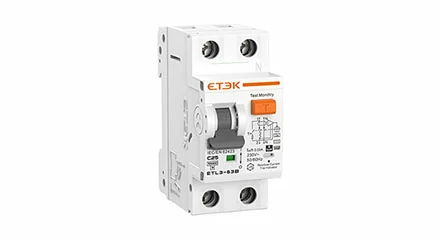
ETEK’s EKL6-100B RCCB is a 10kW system staple:
- Sensitivity: 30mA (prevents electric shock)
- Compatibility: Detects AC, pulsed DC, and smooth DC residual currents
- Current ratings: 40-63A (matches system load)
- Compliance: Meets IEC 61008-1 & IEC 62423 standards
4. Type B RCBO (Combined Leakage & Overcurrent Protection)
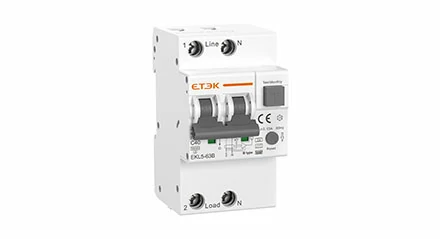
For critical zones like inverter input/output, ETEK’s EKL5-63B RCBO integrates RCCB and MCB functions:
- Dual protection: Handles leakage (30mA) and overcurrent/short-circuit
- Tripping curve: C-type (8In±20%) for solar-specific current fluctuations
- Rated voltage: 230/400VAC
- Ambient range: -25°C to +55°C (ideal for outdoor combiner boxes)
Why ETEK’s 10kW Kit Outperforms Generic Component Combos
Many installers save money by mixing breakers from different brands—but this leads to compatibility issues, warranty voids, and safety risks. ETEK’s kit is engineered as a unified system, with three key advantages:
1. Seamless Compliance with Global Standards
Every component in the kit is IEC 60947-2 (breakers), IEC 61008-1 (RCCBs), and IEC 61009-1 (RCBOs) certified. This eliminates compliance headaches during system inspections—a critical benefit for commercial 10kW installations.
2. Optimized Coordination Between Components
ETEK’s DC breakers, AC breakers, RCCBs, and RCBOs are tested together to ensure selective tripping. In a fault scenario, only the affected breaker trips, minimizing downtime instead of shutting down the entire system.
3. Durability for 25-Year Solar System Lifespan
Solar systems are designed to last 25+ years—breakers should too. ETEK’s components use thermal-magnetic trip units (resistant to wear) and UV-resistant enclosures (for outdoor use), with a 10-year manufacturer warranty. Generic breakers often fail in 5-7 years, requiring costly replacements.
4. Customization for System-Specific Needs
Not all 10kW systems are the same. ETEK offers kit customization:
- String count adjustments (4-6 strings)
- Inverter brand compatibility (SMA, Fronius, Huawei, etc.)
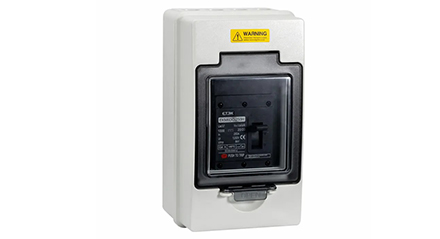
- Indoor/outdoor protection (IP65 waterproof options for DC MCCBs)
- Supplementary DC disconnect switches for maintenance safety
To request a customized kit for your 10kW system, you can explore tailored solutions.
Solar Circuit Breakers vs. Alternative Protection Devices for 10kW Systems
Installers often debate breakers vs. fuses or disconnect switches. Here’s a field-tested comparison:
1. Fuses
Fuses are low-cost and compact but have two fatal flaws for 10kW systems: they’re single-use (require replacement after a fault) and lack residual current protection. For a system that’s expected to run 25 years, frequent fuse replacements are impractical and costly.
2. Disconnect Switches
Disconnect switches are essential for maintenance but offer no overload or short-circuit protection. They’re a complement to breakers, not a replacement—using only switches leaves the system vulnerable to electrical faults.
3. Circuit Breakers
Deliver the perfect balance of reusable protection, selective tripping, and multi-functional safety (overcurrent, short-circuit, leakage). For 10kW systems, they’re the only solution that meets all IEC requirements while minimizing long-term operational costs. ETEK’s kit takes this further by optimizing every breaker for solar-specific conditions, from voltage spikes to temperature fluctuations.
Common Mistakes to Avoid When Selecting a 10kW Breaker Kit
After 15 years installing solar systems, I’ve seen these mistakes cost installers thousands:
Mistake 1: Using AC Breakers for DC Circuits
AC breakers can’t handle DC’s persistent arcing—they’ll fail to quench arcs during faults, leading to fires. Always use DC-specific breakers (like ETEK’s EKM1 series) for PV arrays.
Mistake 2: Skipping Type B RCCBs for Transformer-Less Inverters
Standard Type AC RCCBs ignore smooth DC residual currents. This violates safety standards and puts installers at risk—invest in Type B or face costly rework.
Mistake 3: Overlooking Breaking Capacity
A 10kW system’s short-circuit current can reach 6kA. Using a breaker with 3kA breaking capacity will cause it to explode during a fault—always choose 6kA+ for DC circuits and 10kA+ for AC.
Mistake 4: Buying Cheap, Uncertified Components
Uncertified breakers may save
50upfrontbutcandestroy
10,000+ in solar equipment. ETEK’s certified components are worth the investment for peace of mind.
Final Recommendations for 10kW System Installers
A complete solar circuit breaker kit is the most critical investment in your 10kW system’s safety and reliability. When selecting a kit:
- Prioritize IEC certification and solar-specific ratings (1000VDC, Type B RCCBs).
- Choose a unified kit from a single brand (like ETEK) to ensure compatibility.
- Opt for customization to match your inverter, string count, and installation environment.
- Avoid generic components—they risk compliance, safety, and system lifespan.
ETEK’s 10kW kit is engineered by solar protection experts, not just electrical component manufacturers. Every detail—from non-polarity DC breakers to temperature-compensated AC breakers—is designed to solve real installer pain points.
To get a detailed kit quote or technical support for your 10kW system, you can contact ETEK’s solar protection team.
-1640.jpg)